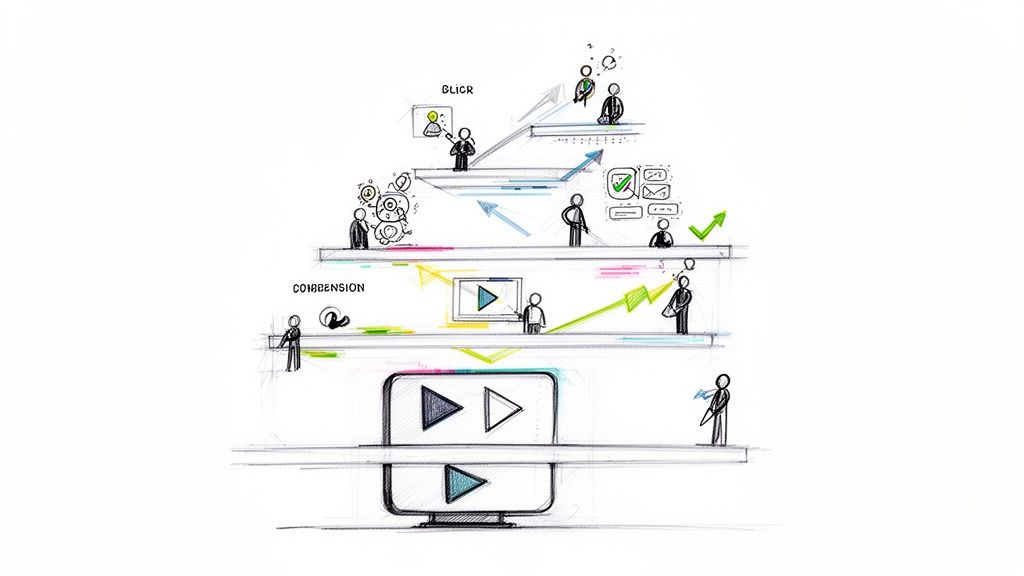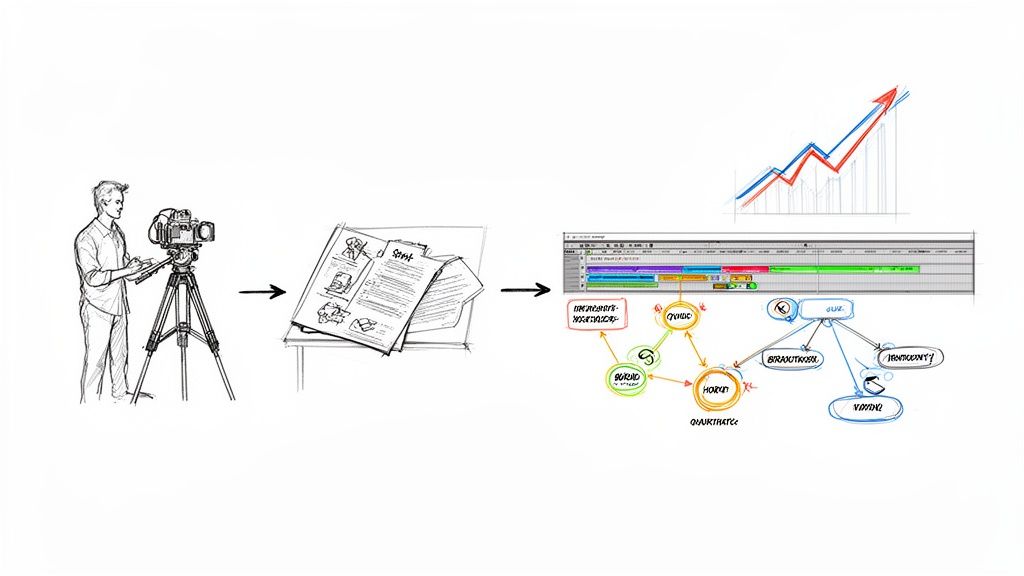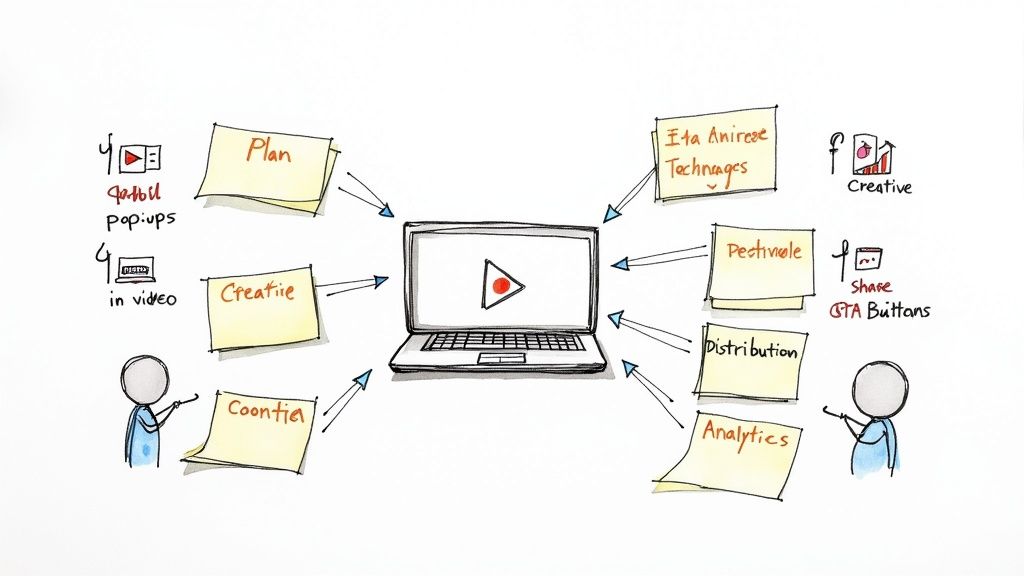
Transform Training with Interactive Video Marketing
Interactive video marketing best practices are essential for corporate training and development professionals aiming to boost engagement and measure learner comprehension. With Mindstamp, an interactive video platform, you can create scenario-based assessments, compliance modules and onboarding content that transform passive lessons into immersive learning experiences.
In this roundup you’ll discover the top 10 video marketing best practices for planning, production, interactivity, distribution and measurement tailored to corporate training. Each section offers Mindstamp-specific implementation tips, practical L&D examples and metrics to track, like completion rate, quiz accuracy and certification attainment.
Whether you manage learning and development programs, support sales enablement or design internal certification courses, this list equips you with actionable strategies. Expect clear steps to craft interactive video experiences that maximize engagement, simplify content updates and reveal deep performance insights.
What you’ll learn:
- Define clear training goals, KPIs and performance benchmarks
- Conduct audience-centric research to guide L&D content planning
- Optimize video length and format for corporate learning channels
- Craft compelling hooks and retention-focused narratives
- Integrate interactive CTAs, quizzes and branching scenarios
- Implement strategic metadata optimization for internal search and discoverability
- Develop a multi-platform distribution and promotion plan across LMS, intranet and social
- Balance professional production quality with authentic delivery
- Establish a consistent posting schedule and content batching workflow
- Build community engagement and creator-learner relationships
These video marketing best practices matter because interactive training drives higher knowledge retention, faster skill mastery and measurable ROI. Mindstamp’s platform simplifies adding interactive layers, gathering real-time feedback and exporting analytics. Apply these tactics to transform your corporate training videos into dynamic, measurable learning tools.
1. Define Clear Video Marketing Goals, KPIs and Measure Performance
Setting clear goals is the foundation of any successful video marketing best practices, especially in corporate training and development. By defining objectives like compliance completion, onboarding efficiency or skill mastery and pairing them with KPIs, teams can track progress from first view to certification.

Why Set Clear Goals, KPIs and Performance Tracking
Without measurable targets it is impossible to optimize ROI. Clear goals align stakeholders, provide focus for creative teams and guide data-driven iterations. In training use cases, tracking quiz completions or branching choices can reveal competency gaps. This framework also supports iterative testing of interactive scenarios using Mindstamp.
Real-World Examples
- A global bank set a target of 90% completion for its anti-money laundering modules, achieving regulatory compliance ahead of schedule
- A tech company measured a 30% increase in onboarding satisfaction by adding Mindstamp quizzes during new-hire introductions
- A retail chain tracked a 50% reduction in product returns after training store teams with interactive demo videos
- An international consultancy optimized branching scenarios, boosting consultant readiness scores by 20%
- A medical device manufacturer improved field technician competency by 40% through scenario-based assessments in Mindstamp
Actionable Tips
- Use UTM parameters to tag Mindstamp training videos in Google Analytics
- Establish baseline metrics with the first 5 to 10 modules
- Break down goals by channel: LMS, intranet, LinkedIn Learning
- Review and adjust KPIs quarterly to align with business cycles
- Test one interactive variable at a time and document outcomes in a scorecard
- Set up custom dashboards in Google Data Studio for real-time monitoring
- Leverage Mindstamp analytics for click hotspots and quiz score distributions
When and Why to Use This Approach
Implement this method before production to ensure every interactive element supports your learning objectives. This process is vital for L&D managers, corporate training teams and digital agencies needing measurable training impact. Visit Mindstamp to get started.
2. Create Audience-Centric Content Planning and Research
Building videos around real learner insights is a cornerstone of video marketing best practices, especially for corporate training and development teams. By researching roles, pain points and preferred learning styles, you ensure interactive eLearning content resonates and drives engagement rather than relying on assumptions.
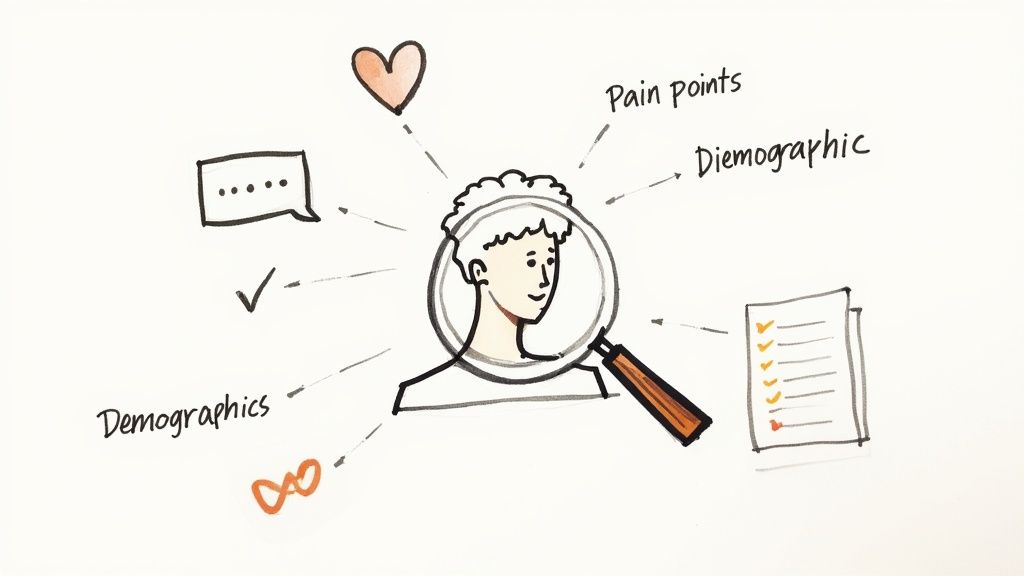
Why Focus on Audience Research in Video Marketing
Without a deep understanding of your learners, even the most interactive elements can fall flat. Audience research aligns training scripts, visuals and in-video assessments with real needs. In corporate learning this means uncovering knowledge gaps, ideal pacing and tone that match job responsibilities. This approach minimizes rework, boosts completion rates and fosters stakeholder buy-in.
Real-World Examples
- A Fortune 500 consultancy conducted focus groups with clients to shape scenario-driven leadership modules
- A global retailer surveyed store managers to identify skill gaps before scripting product training
- An enterprise software provider analyzed support tickets to design interactive tutorials addressing common user errors
- A healthcare network developed learner personas for clinical staff, tailoring modules by role
- A logistics company leveraged internal feedback forums to generate content ideas for safety training
Actionable Tips
- Use Google Trends and YouTube autocomplete to spot corporate learning topics
- Conduct 1:1 interviews with HR or department heads to capture knowledge gaps
- Analyze competitor training forums for recurring questions or praise
- Build detailed learner personas before scripting interactive flows
- Survey employees on preferred formats, lengths and devices
- Monitor internal social channels for sentiment shifts around training themes
- Map pain points to Mindstamp hotspots, branching quizzes and click zones
When and Why to Use This Approach
Adopt audience-centric planning at the ideation stage to guide every interactive decision. This method is essential for corporate training managers, instructional designers and digital agencies who need measurable impact. By starting with real needs you reduce costly revisions and increase learner comprehension. Visit https://www.mindstamp.com to integrate interactive video research and deliver engaging, data-driven training at scale.
3. Optimize Video Length and Format for Platform and Context
Tailoring video length and format to your LMS, intranet, mobile apps and social channels is a cornerstone of video marketing best practices, especially in corporate training. From microlearning mobile clips to deep-dive desktop modules, optimizing duration and aspect ratio maximizes engagement and retention. Repurposing long-form workshops into short, interactive segments boosts learner touchpoints across the organization.
Why Optimize Length and Format
Short videos capture attention quickly—85% of viewers watch without sound, so captions and clear visual hooks in the first 3 seconds are vital. Long-form content on training portals or YouTube drives deeper learning, but must be broken into digestible chapters. Matching aspect ratios to each platform (9:16 for mobile LMS, 16:9 for desktop portals, 1:1 for LinkedIn) prevents wasted screen real estate and supports on-the-go learning.
Real-World Examples
- A multinational tech firm repurposed onboarding webinars into five interactive microlearning segments on Mindstamp
- A pharmaceutical company adapted 30-minute compliance lectures into 3-minute scenario drills with branching assessments
- A global sales team converted quarterly training into vertical format for mobile-first access
- An HR department tested segment lengths, finding 5-minute modules drove a 25% uplift in completion rates
- A manufacturing plant improved safety training retention by adding hotspot-driven quizzes
Actionable Tips
- Start with a strong visual or question in the first 3 seconds
- Add captions and graphical callouts for silent or mobile learners
- Create multiple cuts of core content: trailers, highlights, deep dives
- Use pattern interrupts every 5–10 seconds to reset attention
- Test 3, 5 and 10-minute versions and compare view-through rates
- Match aspect ratio to platform guidelines—9:16 for LMS, 16:9 for desktop portals
- Leverage Mindstamp to layer quizzes, hotspots and branching in any format
When and Why to Use This Approach
Implement length and format optimization during editing to align with distribution plans. This tactic suits L&D managers, digital agencies and sales trainers who must meet diverse platform specs while maintaining learner engagement. For interactive repurposing and real-time analytics, explore Mindstamp.
4. Develop Compelling Hooks and Retention-Focused Narratives
Capturing attention in the first 3–5 seconds is critical for video marketing best practices. By using scenario-based hooks, pattern interrupts or immediate value statements, you set the stage for higher retention and deeper learner engagement in corporate training modules. This technique aligns with interactive video strategies that front-load value and drive completion.
Why Prioritize Compelling Hooks and Narratives
Without strong hooks, learners skip ahead. A retention-focused narrative ensures participants stay engaged, boosting comprehension and ROI. Corporate training videos benefit from real-world scenarios that resonate with job functions and interactive prompts embedded via Mindstamp to sustain momentum. This approach underpins scalable, data-driven video solutions for organizations.
Real-World Examples
- A cybersecurity course opens with a simulated breach scenario to hook learners in the first 3 seconds
- A leadership training shows a real executive’s critical decision point upfront to spark immediate engagement
- A compliance module starts with a vivid case study of regulatory fines
- A sales workshop interrupts patterns by posing a high-stakes customer objection right away
Actionable Tips
- Test 3–5 different hooks on the same training module
- Ask “Why should learners care in 3 seconds?” during scripting
- Use platform analytics to pinpoint exact drop-off moments
- Match hook style to channel norms—LMS, LinkedIn Learning or YouTube
- Create pattern interrupts with text overlays, quick cuts or music shifts
- Front-load key facts or a striking statistic in your opening seconds
When and Why to Use This Approach
Implement this tactic during the scripting phase to ensure every second counts. In corporate L&D scenarios, strong hooks combined with branching narratives in Mindstamp guide learners through decision-based simulations, raising completion rates and knowledge retention. Learn more about Developing hooks and retention-focused narratives
5. Implement Strategic Video SEO and Metadata Optimization
Optimizing titles, descriptions, tags, transcripts, captions and thumbnails is essential for making your corporate training and interactive learning videos discoverable on YouTube, internal portals and Google. By weaving in target keywords and structuring metadata, you drive search-driven audiences to your Mindstamp-powered modules. This ensures your video marketing best practices reach learners who need compliance training, product demos or onboarding tutorials.
Why Optimize SEO and Metadata
Without proper metadata, even the most engaging training content may go unseen. Strategic SEO helps your videos rank for relevant search terms like “remote work compliance” or “interactive onboarding tutorial.” Well-structured descriptions and captions also improve accessibility and indexing, boosting both learner engagement and search visibility. This alignment of SEO and video marketing best practices maximizes ROI on every asset.
Real-World Examples
- A training team used keywords like “remote work compliance” to rank their onboarding series on YouTube
- A medical services company published searchable transcripts of safety training to boost internal search discoverability
- A software vendor positioned “enterprise software setup tutorial” at the start of titles to improve LMS search results
- A financial institution grouped regulatory training into playlists, enhancing “up next” recommendations
Actionable Tips
- Use YouTube’s search autocomplete to discover trending training keywords
- Verify search volume with Google Keyword Planner before finalizing terms
- Insert timestamps in descriptions for easier indexing and learner navigation
- A/B test thumbnails and retain the top-performing variant
- Add captions and subtitles in multiple languages via Mindstamp to widen reach
- Limit description preview to 100–150 characters, then expand with keyword-rich details
- Link videos from relevant intranet pages, LMS modules or resource hubs to boost authority
When and Why to Use This Approach
Implement SEO and metadata optimization before publishing any training or marketing video. This ensures each Mindstamp interactive element—from quizzes to click hotspots—benefits from organic search discovery. Use this method when launching new learning modules, updating existing tutorials or targeting new audiences. By marrying video marketing best practices with robust SEO, your corporate training content gains sustained visibility and learner engagement.
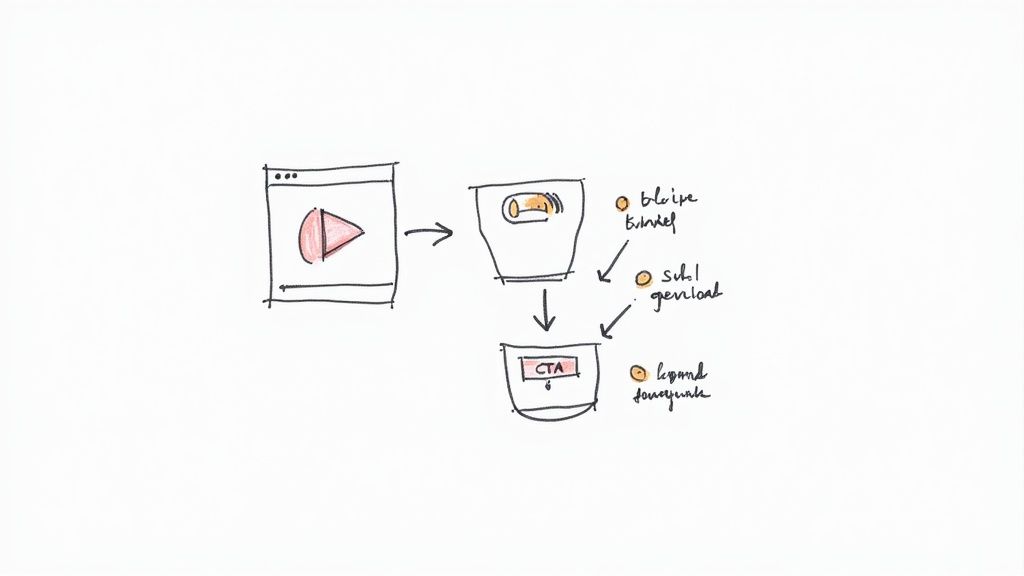
6. Integrate Strong Calls-to-Action (CTAs) and Conversion Optimization
Integrating clear, compelling CTAs throughout your videos is essential to guide learners toward desired actions and measure real impact. By placing CTAs at strategic moments and optimizing their design and messaging, you can boost engagement, capture leads and drive participants deeper into your training funnels.
Why Integrate Strong CTAs and Conversion Optimization
Strong CTAs turn passive viewers into active participants, whether they launch a quiz, download a resource or complete a certification. In corporate training and development, CTAs steer learners to supplementary materials, assessment forms or feedback surveys. Conversion optimization ensures each CTA placement and message maximizes click-through and completion rates.
Real-World Examples
- A pharmaceutical training video places a “Launch Quiz” CTA after each module, driving a 60% completion rate
- An IT department embeds “Schedule a workshop” overlays in onboarding videos, increasing team engagement by 30%
- A sales enablement team ends product demos with “Access the SSL certificate guide” overlay, boosting downloads 25%
- A compliance department uses timed “Start Certification Assessment” CTAs via Mindstamp to enforce policy acknowledgment
- A customer success team A/B tested interactive CTA wording in Mindstamp, improving click-through by 18%
Actionable Tips
- Place primary CTA after delivering core value (e.g., after a scenario demonstration)
- Use contrasting colors and motion to make CTAs stand out
- Write specific CTAs (“Click to complete your compliance quiz” vs “Learn more”)
- A/B test placement, design and copy with Mindstamp’s interactive overlays
- Employ YouTube cards or LMS widgets for non-intrusive mid-roll CTAs
- Introduce urgency when relevant (certification deadlines or workshop seats)
- Match CTAs to the learner journey stage (awareness, practice, assessment)
- Add UTM parameters to track each CTA’s performance in Google Analytics
When and Why to Use This Approach
Use strong CTAs when you need to capture leads, measure learning milestones or drive resource downloads in training programs. This approach is vital for L&D managers, sales teams and digital agencies looking to quantify video ROI and push learners toward certification or next steps. Visit Mindstamp to embed and A/B test interactive CTAs in your corporate training videos.
7. Develop Strategic Multi-Platform Distribution and Promotion Plan
A multi-platform distribution and promotion plan lays out where and how your interactive training videos will reach learners, prospects and stakeholders. By mapping paid, earned and owned channels, you ensure each asset—from compliance modules to leadership workshops—enjoys maximum exposure. This approach optimizes native formats, repurposes long-form content for short-form outlets and leverages partnerships and paid support to amplify reach.
Why Develop a Multi-Platform Distribution Plan
Without a clear distribution roadmap, your video marketing best practices fall flat. A strategic plan aligns corporate training and L&D teams on timing, format and budget. It ensures your Mindstamp interactive quizzes and branching scenarios perform natively on YouTube, LinkedIn Learning, LMS portals and internal social feeds. This coordination drives consistent brand messaging and measurable engagement across each touchpoint.
Real-World Examples
- A global consultancy repurposed its leadership development series from LMS to LinkedIn Learning and internal intranet videos
- A retail chain published product training on YouTube, LMS and embedded on employee portals
- A customer support team combined internal uploads with targeted email promotion for new policy training
- A sales group supplemented webinars with Mindstamp interactive recaps for on-demand coaching
Actionable Tips
- Draft a distribution timeline one week before launch
- Follow the 80/20 rule: 80% platform-native, 20% cross-posted content
- Publish on YouTube first for permanence, then repurpose for short-form channels
- Schedule posts across time zones to capture global learners
- Tie content pillars to broader L&D and brand goals
- Allocate 30% of your promotion budget to paid social amplification
- Coordinate email drops with video releases and respond to comments within 24 hours
When and Why to Use This Approach
Use this method once your video content is production-ready and you need maximum engagement across audiences. It suits marketing professionals, corporate training and L&D managers who must track learner comprehension and ROI. For a deeper dive, learn more about Develop Strategic Multi-Platform Distribution and Promotion Plan.
8. Create Professional Production Quality While Balancing Authenticity
Delivering high production quality in lighting, audio and editing while preserving authentic, relatable moments is a key video marketing best practice. In corporate training, this balance increases credibility and keeps learners engaged from orientation through assessment.
Why Professional Quality and Authenticity Matter
High production value signals expertise and attention to detail. Authentic interactions foster trust and connection with learners. Combined, they boost completion rates, knowledge retention and engagement in training modules. Interactive features like in-video quizzes or clickable hotspots feel more natural when the footage looks polished yet genuine.
Real-World Examples
- An HR team pairs clean audio and B-roll with unscripted employee testimonials to improve new-hire engagement
- A software vendor records 4K screen capture tutorials with authentic developer commentary for clarity
- A safety training video uses professional color grading alongside real on-floor footage to build trust
- A leadership module blends executive interviews with interactive Mindstamp hotspots on key insights
Actionable Tips
- Invest in quality microphones before upgrading cameras
- Use natural window light when possible for flattering, cost-effective illumination
- Film in 4K even if final output is 1080p for flexible cropping and stabilization
- Test equipment, lighting angles and room acoustics before production day
- Record 2–3 backup audio tracks simultaneously to avoid data loss
- Preserve unscripted takes in the edit to maintain authenticity
- Apply consistent color grading across all training videos
- Use professional editing software like Adobe Premiere, Final Cut Pro or DaVinci Resolve
- Leverage Mindstamp to insert interactive hotspots and quizzes on genuine moments
When and Why to Use This Approach
Use this method for cornerstone training modules, product demos or executive briefs where both authority and relatability are essential. L&D managers and corporate trainers benefit from polished visuals that support interactive Mindstamp elements, helping measure learner comprehension without sacrificing personality. This approach drives higher engagement, trust and measurable ROI in your video marketing best practices.
9. Establish Consistent Posting Schedule and Content Batching Strategy
Building learner expectations and supporting algorithm performance starts with a sustainable posting schedule and batch production workflow. By planning calendars, creating content buffers and grouping production tasks, teams can streamline video marketing best practices for corporate training and development. Batching film and edit sessions ensures interactive Mindstamp modules, quizzes and branch scenarios go live on time without last-minute rushes.
Why Establish a Consistent Schedule and Batch Workflow
A steady cadence signals reliability to learners, keeping engagement high and completion rates steady. Platforms and internal portals favor regular activity, boosting visibility. Batching reduces context switching, freeing L&D teams to focus on instructional design and interactive elements in Mindstamp without sacrificing quality.
Real-World Examples
- A large enterprise’s L&D department publishes compliance modules every month following a strict batch calendar
- A technology training vendor records a quarter’s worth of tutorial episodes in a two-day shoot to support weekly drops
- An HR team maintains a bi-weekly knowledge series on internal channels, leveraging Mindstamp to schedule interactive assessments
Actionable Tips
- Choose a realistic posting frequency—weekly drops often beat erratic bursts
- Use a content calendar tool such as Google Sheets, Asana or Notion
- Batch film similar modules and record interactive checkpoints in one session
- Build templates for intros, outros and Mindstamp quizzes to speed up edits
- Schedule posts at optimal times per channel based on your analytics
- Maintain a 2–3 week buffer of ready-to-publish videos for emergencies
- Publicly share your schedule to set learner expectations and drive repeat visits
- Review performance data monthly to refine posting days and time slots
When and Why to Use This Approach
Implement this method at the start of your training program to prevent burnout and missed deadlines. It’s vital for corporate training managers, L&D teams and digital agencies scaling interactive video content. Consistency fosters trust, improves platform favor and frees creative bandwidth for designing impactful Mindstamp interactions. Visit https://www.mindstamp.com to streamline your batching workflow.
10. Build Community Engagement and Creator-Audience Relationships
Building loyal communities rather than just accumulating views is essential for video marketing best practices, especially in corporate training and development. Engaging authentically with learners fosters trust, repeat viewership and brand advocacy.
Why Build Community Engagement and Creator-Audience Relationships
Active dialogue transforms passive viewers into invested participants. In training contexts, discussion forums and comment threads reinforce learning by encouraging reflection and peer feedback. When learners see their input shape interactive hotspots or branching scenarios in Mindstamp, they feel ownership over their development journey.
Real-World Examples
- A global services firm holds internal discussion forums where participants discuss interactive scenarios post-training
- A manufacturing company’s safety team solicits feedback on hazards in a Yammer group, updating Mindstamp hotspots accordingly
- A training department hosts quarterly webinars to review code-of-conduct scenarios, using Mindstamp polls live
- A sales enablement group awards badges for top discussion contributors, integrated through interactive video checkpoints
Actionable Tips
- Block out 15 minutes daily to reply to comments on recent training videos
- Create canned responses for FAQs, clarifying policies or technical steps
- Use the YouTube Community tab or internal social channels to post quick polls, sneak peeks or flash quizzes
- Acknowledge engaged learners by name in follow-up videos or shout-outs
- Integrate viewer suggestions visibly in interactive checkpoints and credit contributors
- Schedule monthly polls on content preferences, then adjust next module accordingly
- Host quarterly live streams or webinars for direct Q&A and collaborative problem solving
When and Why to Use This Approach
Implement community engagement when you need higher completion rates, deeper comprehension and stronger brand loyalty. This strategy is vital for L&D managers, corporate trainers and digital agencies crafting scalable interactive learning with Mindstamp. Fostering two-way communication drives repeat viewership, cultivates advocates and unlocks quality feedback for ongoing optimization.
10-Point Video Marketing Best Practices Comparison
| Item | Implementation complexity | Resource requirements | Expected outcomes | Ideal use cases | Key advantages |
|---|---|---|---|---|---|
| Define Clear Video Marketing Goals, KPIs and Measure Performance | ●●● | ●● | Measurable ROI & optimized performance () | Data-driven training and stakeholder reporting | Aligns content to business outcomes; enables continuous improvement |
| Create Audience-Centric Content Planning and Research | ●● | ●● | Higher relevance, engagement & retention () | Role-specific onboarding and upskilling | Reduces wasted production; improves personalization |
| Optimize Video Length and Format for Platform and Context | ●● | ●● | Better retention & multi-channel reach () | Microlearning and deep-dive modules | Improves reach; maximizes content ROI via repurposing |
| Develop Compelling Hooks and Retention-Focused Narratives | ●●● | ●● | Dramatically higher watch-through and completion () | Scenario-based simulations and case studies | Boosts early retention and engagement |
| Implement Strategic Video SEO and Metadata Optimization | ●●● | ●● | Improved discoverability & internal search () | Compliance and certification modules | Long-term organic reach; better accessibility |
| Integrate Strong Calls-to-Action (CTAs) and Conversion Optimization | ●● | ● | Increased completions & trackable actions () | Certification drives and resource downloads | Clear next steps for learners; measurable lift |
| Develop Strategic Multi-Platform Distribution and Promotion Plan | ●●●● | ●●● | Dramatically increased reach & ROI () | Global training rollouts and cross-channel campaigns | Amplifies reach; reduces platform dependency |
| Create Professional Production Quality While Balancing Authenticity | ●●● | ●●● | Higher credibility, retention & sharability () | Executive briefings and cornerstone modules | Elevates perceived quality while preserving authenticity |
| Establish Consistent Posting Schedule and Content Batching Strategy | ●● | ●● | Improved learner habits & platform favor () | Recurring compliance and knowledge series | Predictability for audience; efficiency through batching |
| Build Community Engagement and Creator-Audience Relationships | ●●● | ●● | Stronger retention, advocacy and feedback loop () | Peer learning communities and follow-up forums | Creates loyal advocates and continuous improvement |
Next Steps: Putting Best Practices into Action
Summarize Key Insights
Before you dive in, here’s a quick snapshot of the 10 video marketing best practices we covered:
- Define clear training goals, KPIs, and measure performance
- Create audience-centric content planning and research
- Optimize video length and format for each platform and context
- Develop compelling hooks and retention-focused narratives
- Implement strategic video SEO and metadata optimization
- Integrate strong calls-to-action and conversion optimization
- Build a multi-platform distribution and promotion plan
- Balance professional production quality with authenticity
- Establish a consistent posting schedule and content batching strategy
- Foster community engagement and creator-audience relationships
“Interactive video turns passive viewers into active learners by weaving quizzes, CTAs and branching paths into every lesson.”
Actionable Next Steps
- Audit your current training videos against each best practice checklist item. Identify low-hanging fruit for quick wins.
- Set specific targets for engagement, comprehension, and certification attainment in your corporate L&D initiatives. Map these to KPIs.
- Craft storyboards that include Mindstamp’s interactive layers—quizzes, hotspots and branching—to boost retention.
- Choose video formats per channel: microlearning clips for quick skill boosts, long-form tutorials for deep dives.
- Embed clear, actionable CTAs using Mindstamp overlays to prompt feedback, certification sign-ups or resource downloads.
- Schedule regular publishing cycles and batch record related topics to maintain momentum and learner expectations.
Continuous Refinement with Mindstamp
- Leverage Mindstamp analytics dashboards to track quiz responses, click-through rates and completion times.
- Run A/B tests on different hooks or CTAs to see which interactive elements drive higher engagement.
Regularly review metrics to adjust pacing, narrative style and interactivity depth. Use learner feedback to tweak branching scenarios and question difficulty.
Why Mastering These Concepts Matters
Corporate training leaders and L&D managers are under pressure to prove ROI on every program. By applying these video marketing best practices, you:
- Increase learner engagement, driving higher completion rates and knowledge retention
- Generate actionable data on user behavior to inform future training and assessments
- Improve brand affinity by delivering polished yet authentic learning experiences
Sales teams and digital agencies benefit too—interactive video pushes prospects further down the funnel, yielding more qualified leads and shorter sales cycles.
Broader Impact and Benefits
- Enhanced Learning Outcomes: Active video formats help employees retain 60% more information.
- Scalable Training Programs: Batch and distribute interactive modules across global teams without extra overhead.
- Data-Driven Decisions: Real-time insights enable you to pivot quickly based on learner performance.
- Cost Efficiency: Replace lengthy instructor-led sessions with reusable, branded video content.
- Community Building: Foster peer discussions through integrated comments, polls and follow-up resources.
Embracing these video marketing best practices transforms your corporate training from a static repository into a dynamic learning ecosystem. The result is measurable impact on both skill mastery and organizational growth.
Keep experimenting, measuring and iterating—your most effective training video is only one tweak away.
Ready to unlock the full power of interactive video in your corporate training? Try Mindstamp to add quizzes, branching paths and CTAs directly into your videos. Get started today and see how Mindstamp can elevate your video marketing best practices into measurable learning experiences.