
10 High-Impact B2C Lead Gen Strategies for Corporate Training in 2025


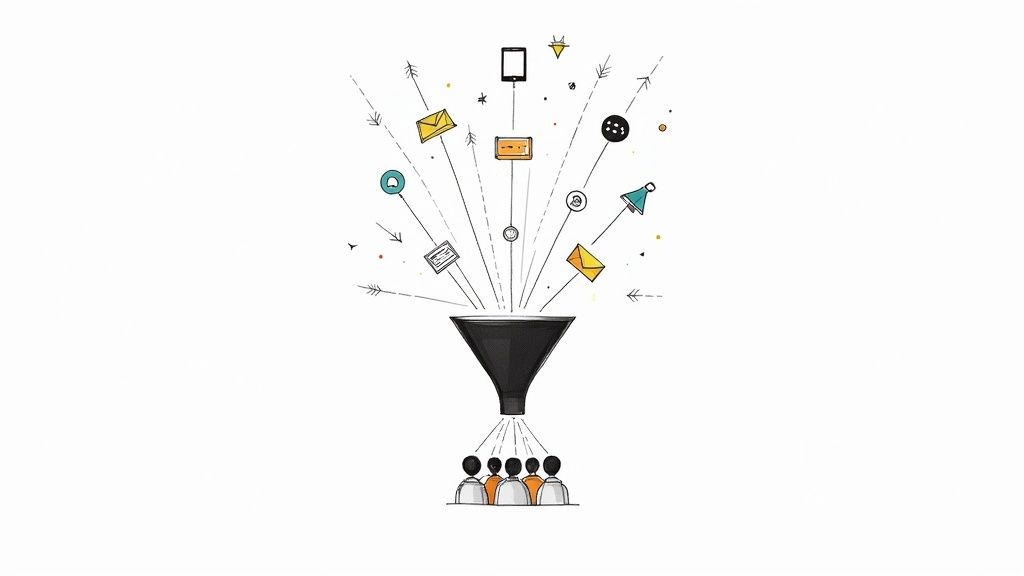
In a crowded B2C marketplace, standard lead generation tactics are losing their edge. Consumers today demand genuine value and engaging experiences from their very first interaction with a brand, making a sophisticated B2C lead gen strategy more critical than ever. Simply attracting eyeballs is not enough; the goal is to captivate attention, foster interaction, and build a direct path from interest to conversion. This requires a move away from passive content consumption toward dynamic, participatory brand experiences, especially in fields like corporate training and development.
This guide provides a deep dive into 10 powerful, actionable strategies designed to build a high-performance lead generation funnel. We will explore everything from content marketing and social media advertising to advanced conversion rate optimization and the strategic use of chatbots. More importantly, we will demonstrate how to integrate interactive video using platforms like Mindstamp into each channel. This transforms passive viewing of training content into an active learning experience, allowing you to capture lead data from potential learners, qualify their needs, and personalize follow-ups directly within the video player. For a forward-looking perspective on attracting customers, explore these 10 essential digital marketing strategies for startups in 2025.
Whether you are a marketing professional in the e-learning space, a corporate training manager measuring learner comprehension, or a sales leader aiming to showcase training modules more effectively, the following methods offer a clear roadmap. You will learn not just what to do, but how to implement these strategies with concrete examples and benchmarks, equipping you to build a scalable B2C lead generation engine that drives measurable and sustainable growth in the professional development sector. Let's get started.
1. Content Marketing & Blogging
Content marketing is a strategic approach focused on creating and distributing valuable, relevant, and consistent content to attract and retain a clearly defined audience. Unlike direct advertising, which pushes a product, this method pulls customers in by offering solutions to their problems. For B2C lead gen in the corporate training space, this means establishing your brand as a trusted authority on topics like leadership development or compliance training, which in turn drives profitable customer action.

This inbound strategy excels at building long-term relationships and generating organic traffic. By consistently producing high-quality blog posts, guides, and infographics that address specific professional development pain points, you naturally attract individuals already searching for your expertise. Think of how a platform offering management courses could become a go-to resource for new managers, generating leads by simply providing valuable career advice.
Actionable Steps for Implementation
To effectively implement content marketing for B2C lead gen, follow a structured process. Start by identifying your target audience's biggest professional challenges and questions.
- Keyword Research: Target long-tail keywords (e.g., "how to create an interactive training video") that indicate user intent and have less competition. This ensures your content is discovered by a relevant audience of learners or L&D professionals.
- Content Creation: Develop a content calendar around topics like "improving employee engagement" or "best practices for remote team training." Create comprehensive guides and case studies that offer genuine value.
- Lead Capture Integration: Embed clear calls-to-action (CTAs) and lead capture forms within your content. Offer a downloadable "Training Needs Assessment Checklist" or an exclusive video in exchange for an email address.
- Content Promotion: Repurpose and share your content across professional networks like LinkedIn, email newsletters, and relevant online communities to maximize reach and drive traffic back to your site.
Elevate Content with Interactive Video
Incorporating interactive video platform tools like Mindstamp can transform your content from a static resource into a dynamic lead generation engine. Instead of a simple embedded video, create an interactive training module where viewers can click on different concepts or answer questions to test their knowledge. Gate a crucial part of the video behind a lead capture form, offering to unlock the rest of the learning content in exchange for their contact information. This makes your B2C lead gen effort more engaging and effective for a professional audience.
2. Social Media Advertising
Social media advertising involves running paid campaigns on platforms like Facebook, Instagram, and especially LinkedIn to reach highly specific audience segments. Unlike organic social media, this approach leverages powerful targeting tools to place your message directly in front of consumers based on their job titles, industries, and skills. For B2C lead gen in corporate training, this means you can efficiently capture the attention of potential learners or HR managers with compelling course offers and drive them directly into your enrollment funnel.
This direct-response strategy is effective because it meets professionals where they spend their time, offering a low-friction path to conversion. By using native ad formats, you can generate leads without users ever leaving the platform. Think of how online course providers use targeted LinkedIn ads to promote certifications, capturing emails in exchange for a free course preview, turning professional connections into a massive list of warm leads.
Actionable Steps for Implementation
To launch a successful social media advertising campaign for B2C lead gen, a methodical approach is key. Begin by defining your ideal learner profile to guide your targeting.
- Audience Targeting: Use LinkedIn's targeting to reach users with specific job titles like "Sales Manager" or "HR Director." Use lookalike audiences on Facebook based on your existing learner email lists to find new users with similar characteristics.
- Ad Creative Development: Use high-engagement formats, especially video. A/B test ad creatives showing clips of your training content against static images to identify what drives the lowest cost per lead.
- Conversion Tracking: Properly install tracking pixels (like the LinkedIn Insight Tag) on your website and landing pages. This is crucial for measuring ROI, optimizing campaigns for course sign-ups, and enabling powerful retargeting.
- Retargeting Campaigns: Create "warm" audiences of users who have watched a percentage of your training video ad but did not convert. Serve them specific ads with testimonials or a limited-time enrollment offer to encourage action.
Elevate Advertising with Interactive Video
Incorporate interactive video tools like Mindstamp to make your social ad campaigns stand out and capture higher-quality leads. Instead of driving traffic to a static landing page, direct users to an interactive course preview or a short, engaging training module. You can ask viewers questions about their learning goals directly within the video and then use a lead capture form to provide personalized course recommendations. This transforms a passive ad view into an active, data-rich engagement, making your B2C lead gen efforts far more effective.
3. Email Marketing & Newsletters
Email marketing is the process of building and nurturing a direct line of communication with potential customers through targeted email campaigns. Instead of relying on public platforms, this strategy creates a personal, owned channel to deliver value, course updates, and industry insights directly to an interested audience's inbox. For B2C lead gen, it remains one of the most effective tools for guiding subscribers from initial interest to course enrollment.
This classic digital marketing tactic excels at building sustained relationships and driving conversions with a high ROI. By segmenting your audience (e.g., by industry or career level) and sending relevant newsletters and automated sequences, you can keep your training brand top-of-mind. Think of how professional development platforms use emails to share career tips and announce new courses, nurturing leads by providing genuine value.
Actionable Steps for Implementation
To build an effective email marketing engine for your B2C lead gen, a systematic approach is key. The goal is to attract the right subscribers and keep them engaged.
- Offer Valuable Lead Magnets: Create compelling incentives like a "Free Leadership Assessment," a guide to "Effective Remote Management," or access to an exclusive webinar to encourage sign-ups.
- Segment Your List: Group subscribers based on their stated interests (e.g., sales training vs. HR compliance) or their engagement with your content. This allows for highly personalized and relevant email campaigns.
- Develop Automated Nurture Sequences: Set up a welcome series for new subscribers to introduce your training philosophy and highlight popular courses. Use automation to follow up on abandoned enrollment forms.
- Optimize and Test: Continuously test subject lines, send times, and content formats to improve performance. Monitor key metrics like open rates, click-through rates, and unsubscribes to refine your strategy.
Elevate Email with Interactive Video
You can significantly boost email engagement and lead qualification by embedding interactive video. Instead of just linking to a course description, send an interactive video where subscribers can click on different learning modules to learn more or answer questions to get a personalized course recommendation. This turns a passive email into an active learning experience. Learn more about how to grow your mailing list with interactive video and capture more qualified leads directly from your campaigns.
4. Search Engine Marketing (SEM) & Google Ads
Search Engine Marketing (SEM) is a digital advertising strategy used to increase a website's visibility in search engine results pages (SERPs) through paid ads. Unlike organic SEO, SEM allows brands to place targeted ads in front of consumers who are actively searching for specific solutions, making it a powerful channel for immediate, high-intent B2C lead gen for training programs.
This paid acquisition model excels at capturing bottom-of-the-funnel leads. When a professional searches for terms like "best project management certification" or "online corporate training software," they are signaling a clear intent to purchase. By bidding on these keywords, training providers can position their solution at the exact moment a prospect is ready to convert, driving qualified traffic directly to a conversion-focused landing page.
Actionable Steps for Implementation
To launch an effective SEM campaign, focus on precision, relevance, and continuous optimization. Start by defining your campaign goals and identifying the keywords your ideal learners use.
- Keyword Targeting: Focus on high-intent long-tail keywords (e.g., "interactive video platform for sales training") and branded course names. Use negative keywords like "free" or "jobs" to filter out irrelevant traffic.
- Ad Group & Landing Page Alignment: Create tightly themed ad groups with highly relevant ad copy. An ad for "leadership training" should lead to a dedicated landing page about that specific course, not a generic homepage.
- Optimize Quality Score: Improve your Quality Score by ensuring strong ad relevance, a high expected click-through rate (CTR), and an excellent landing page experience. A higher score reduces your cost-per-click.
- Conversion Tracking: Implement robust conversion tracking to measure which keywords and ads are generating course sign-ups or demo requests. Continuously test different ad copy, headlines, and CTAs.
Elevate SEM with Interactive Video
Drive your SEM-generated traffic to a landing page featuring an interactive course preview or explainer video created with Mindstamp. Instead of a passive viewing experience, let prospects click on different learning modules, answer qualifying questions directly in the video player, and even book a consultation from a button that appears at a key moment. This transforms a standard ad click into an engaging, self-qualifying B2C lead gen experience, significantly boosting conversion rates for training programs.
5. Landing Pages & CRO (Conversion Rate Optimization)
A dedicated landing page is a standalone web page created specifically for a marketing or advertising campaign. Its sole purpose is to capture leads, making it a cornerstone of effective B2C lead gen. By directing traffic from a specific source (like an ad or email) to a page with a single, focused objective, you eliminate distractions and guide the user toward a specific action, such as signing up for a course or downloading a training guide.
This strategy hinges on Conversion Rate Optimization (CRO), the systematic process of increasing the percentage of visitors who take the desired action. Instead of acquiring more traffic, CRO focuses on getting more value from the visitors you already have. Brands offering online courses use this approach to A/B test headlines, testimonials, and call-to-action buttons to maximize enrollments from their marketing spend.
Actionable Steps for Implementation
To maximize the effectiveness of your lead generation efforts, it's essential to continually refine your Conversion Rate Optimisation (CRO) strategies. Start by ensuring every campaign has a dedicated, optimized landing page.
- Align Messaging: Ensure the headline and copy on your landing page directly match the ad or link the visitor clicked. This consistency reassures users they are in the right place to learn about your training program.
- Simplify the Form: Keep your lead capture form as short as possible. Only ask for essential information, as each additional field can decrease your conversion rate. A name and email are often sufficient for an initial inquiry.
- Use a Strong Call-to-Action (CTA): Your CTA button should be visually prominent with contrasting colors. Use clear, action-oriented text like "Download the Course Syllabus" instead of a generic "Submit."
- Incorporate Social Proof: Add testimonials from past learners, logos of companies you've trained, or instructor credentials to build trust and credibility, encouraging visitors to convert.
Elevate Landing Pages with Interactive Video
Transform your landing pages from static pages into engaging, interactive experiences. Instead of just writing about your training course, embed a Mindstamp video that allows users to explore modules, hear from instructors, or click to learn more about specific learning outcomes. You can place a lead capture form directly within the video at a key moment of interest, making the lead generation process seamless and contextually relevant. This approach is highly effective for B2C lead gen, turning passive viewers into qualified learners. Discover more about creating high-impact video landing pages.
6. Webinars & Virtual Events
Webinars and virtual events are powerful B2C lead gen tools that position your brand as an industry authority by offering live, educational content. This strategy creates a direct line of communication with potential learners, allowing you to showcase expertise, answer questions in real-time, and build genuine relationships. Instead of a one-way broadcast, it’s an interactive forum where value exchange happens instantly.
This tactic excels at capturing high-intent leads because attendees voluntarily exchange their contact details for access to specialized knowledge. Think of how thought leaders in professional development attract thousands to their webinars on topics like "The Future of Work" or "AI in the Workplace." The format is ideal for demonstrating a training methodology or teaching a valuable skill, making it a cornerstone for effective B2C lead generation for courses and certifications.
Actionable Steps for Implementation
To launch a successful webinar, you need a strategic approach covering promotion, execution, and follow-up. Start by choosing a topic that solves a pressing problem for your target learner.
- Promote Extensively: Begin promoting your event 2-3 weeks in advance across email, social media (especially LinkedIn), and paid ads. Send reminder emails to registrants to maximize attendance.
- Structure for Engagement: Keep the core presentation to 45-60 minutes to maintain audience focus. Structure your content to be educational first, with a clear and compelling call-to-action (CTA) for a related course near the end.
- Immediate Follow-Up: Send a thank-you email to all attendees within 24 hours, including a link to the recording and your primary CTA. For no-shows, send a separate "sorry we missed you" email with the recording.
- Repurpose Your Content: Don't let the value end with the live event. Repurpose the recording into an on-demand training resource, blog posts, or social media clips to continuously generate leads.
Elevate Webinars with Interactive Video
After the live event, transform your webinar recording into an evergreen lead-generating asset using a tool like Mindstamp. Instead of just hosting a passive video file, embed interactive elements like questions, chapter markers for different topics, and clickable resource links. Gate access to the on-demand webinar behind a lead capture form to continue your B2C lead gen efforts long after the event is over. You can also add clickable CTAs directly within the video, guiding viewers to your course page or a consultation booking link at the most relevant moments.
7. Influencer & Referral Marketing
Influencer and referral marketing leverages the power of social proof by using trusted individuals to advocate for your brand. In the corporate training space, this B2C lead gen strategy means partnering with respected industry experts or satisfied learners to tap into their networks. Instead of broadcasting a marketing message, you rely on authentic voices to tell your story.
This approach is effective because professionals trust peer recommendations and expert endorsements far more than traditional advertising. A training provider could partner with a well-known industry blogger, while a referral program could reward past students for bringing in new ones. By incentivizing both the referrer and the new customer, you create a powerful, scalable loop of new leads.
Actionable Steps for Implementation
To launch a successful influencer or referral program, focus on authenticity and clear incentives. Your goal is to make sharing your brand easy and rewarding.
- Identify Partners: Find micro-influencers (e.g., industry bloggers, popular LinkedIn personalities) whose audience aligns with your target learner. For referrals, start with your most successful and satisfied alumni.
- Create Compelling Incentives: Offer a two-sided reward for referrals (e.g., both the referrer and the new lead get a discount on a course). For influencers, provide unique discount codes or affiliate links for easy tracking.
- Equip Your Advocates: Provide influencers and referrers with a clear brief, course information, and key messaging, but allow them creative freedom to maintain authenticity in their reviews or posts.
- Track and Optimize: Use unique codes or dedicated landing pages to monitor which partners are driving the most leads. Analyze the data to refine your incentives and partnership strategy.
Elevate Referrals with Interactive Video
Use an interactive video platform like Mindstamp to create personalized and engaging referral onboarding videos. Instead of a static FAQ page, send new referrers an interactive video explaining the program. Include clickable hotspots that reveal details about commission rates or buttons that lead directly to their unique sharing link. You can embed a short quiz to confirm they understand the program rules, ensuring your brand ambassadors are well-prepared and motivated from day one.
8. Lead Magnets & Content Upgrades
Lead magnets are valuable, free resources offered to prospects in exchange for their contact information, typically an email address. This tactic removes friction from the lead capture process by providing immediate, tangible value. For B2C lead gen in corporate training, this means offering an irresistible incentive, like a "Career Development Plan" template, a mini-course, or an industry report.
This strategy is highly effective because it operates on the principle of reciprocity; you give something valuable first, making the user more willing to share their details. Think of how a training company might offer a free "Communication Styles Assessment" to capture leads who are interested in improving their soft skills. The key is to offer a resource so relevant and useful that it feels like a must-have for your target audience.
Actionable Steps for Implementation
To successfully implement lead magnets, your offer must be specific, high-value, and instantly accessible. The goal is to solve a very particular problem for your ideal learner.
- Identify a Specific Pain Point: Analyze your audience's professional challenges. What quick win can you provide? A checklist for "preparing for a performance review" is more effective than a generic "career guide."
- Create the Lead Magnet: Develop a high-quality resource. This could be a downloadable PDF, a template, a free trial of a course module, or an exclusive video tutorial. Ensure it delivers on its promise.
- Design a High-Converting Landing Page: Create a dedicated, distraction-free page for your lead magnet. It should have a compelling headline, a clear description of the benefits, and a simple lead capture form.
- Promote Your Offer: Drive traffic to your landing page through blog posts, social media, paid ads, and pop-up forms on relevant pages of your website.
Elevate Content with Interactive Video
Transform a standard lead magnet into a powerful B2C lead gen tool with interactive video. Instead of a static PDF guide, create an interactive video workshop or a "choose-your-own-adventure" style career pathing tool using a platform like Mindstamp. You can gate the full experience behind a lead capture form placed strategically within the video. For instance, offer the first two minutes of a training module for free, then prompt viewers to enter their email to unlock the complete, personalized learning path, dramatically increasing engagement and conversion.
9. Chatbots & Conversational Marketing
Conversational marketing uses AI-powered chatbots and live chat to engage website visitors in real-time, providing immediate answers and personalized guidance. Instead of making potential customers search for course details or fill out a static form, this strategy initiates a proactive dialogue. For B2C lead gen, this means capturing a visitor's attention, qualifying their training needs, and seamlessly guiding them toward enrollment.
This approach excels at reducing friction in the customer journey and providing an "always-on" channel for engagement. By automating initial interactions, you can efficiently answer common questions about course schedules or pricing, and gather contact details without human intervention. This transforms a passive website visit into an active, valuable conversation that generates qualified leads for your training programs around the clock.
Actionable Steps for Implementation
To successfully deploy conversational marketing, focus on creating a helpful and non-intrusive user experience. Your goal is to assist, not annoy.
- Define Chatbot Goals: Determine the primary function. Is it to answer FAQs about certifications, recommend courses based on career goals, or capture emails for a newsletter? A clear objective will shape the conversation flow.
- Craft Your Opening: Test different opening messages based on the page a user is visiting. For a course page, try, "Hi! Can I help you find the right training program for your goals?"
- Design Conversation Paths: Map out logical conversation flows with clear options. For example, "Are you interested in leadership, sales, or technical skills training?" Always include an option to connect with a human advisor.
- Integrate and Automate: Connect your chatbot to your CRM to automatically log new leads and sync conversation data. Use it to automate tasks like scheduling calls with an enrollment advisor.
Elevate Chatbots with Interactive Video
Take your conversational B2C lead gen to the next level by integrating interactive video directly into the chat experience. Instead of just describing a course, have your chatbot offer an interactive Mindstamp video. For instance, a chatbot could ask, "Would you like to see a 2-minute interactive demo of our new compliance module?" The video can include clickable chapters and embedded questions to qualify the lead's specific needs, and a lead capture form can be triggered right before revealing a key feature, capturing their details at the peak of their interest.
10. Video Marketing & YouTube
Video marketing is a powerful B2C lead gen strategy that leverages the high engagement of video content to attract, educate, and convert prospects. By creating compelling videos for platforms like YouTube and LinkedIn, training providers can capture audience attention in a way static text or images cannot. This approach excels at demonstrating training methodologies and showcasing learner success stories.
This strategy builds brand personality and trust by putting a human face—like an expert instructor—to your company. By creating valuable "how-to" content, free mini-lessons, or interviews with industry leaders, you pull viewers in and create a memorable brand experience that drives conversion into full training programs.
Actionable Steps for Implementation
To launch an effective video marketing campaign, you must combine creative production with strategic distribution and optimization. Start with content that resonates with your target audience's professional development needs.
- Platform-Specific Content: Create short, insightful videos for LinkedIn and more in-depth tutorials or course previews for YouTube. Tailor the format and style to each platform's audience.
- SEO for Video: Optimize your YouTube video titles, descriptions, and tags with relevant keywords (e.g., "agile project management tutorial") to improve discoverability in both YouTube and Google search results.
- Engaging Thumbnails & Intros: Design professional, high-contrast thumbnails that stand out. Hook viewers within the first 3-5 seconds with a clear value proposition or an intriguing question about their career.
- Clear Calls-to-Action (CTAs): End your videos with a direct CTA. Guide viewers to a landing page to download a related resource or enroll in a course. Include clickable links in your video descriptions. To learn more about getting started, explore our guide to video marketing for small business.
Elevate Video with Interactive Training
Transform your video marketing into a lead-qualifying tool with an interactive platform like Mindstamp. Instead of a standard course preview, create an interactive video where viewers can click to explore different learning modules. For corporate training leads, you can create a "mini-course" video, gating the final module behind a lead form. This provides immediate value and captures high-intent leads interested in your educational solutions.
B2C Lead Gen: 10-Strategy Comparison
Unifying Your Strategy: The Power of Interactive Engagement
You’ve explored a comprehensive arsenal of B2C lead generation tactics, from the foundational power of content marketing and SEM to the dynamic potential of social media advertising and influencer collaborations. We've detailed ten distinct channels, each a powerful engine for growth in its own right. However, the true mastery of B2C lead gen for corporate training doesn't come from executing these strategies in isolation. It emerges from weaving them into a cohesive, learner-centric journey.
The ultimate goal is to move beyond simply broadcasting your message and instead invite your audience into a meaningful dialogue. Modern learners don't just want to be sold to; they want to be engaged, educated, and understood. This shift from passive consumption to active participation is the most critical takeaway for any training provider aiming to build a sustainable pipeline of qualified leads. It's the thread that connects a high-performing blog post to a high-converting landing page and a viral social campaign.
This is where the transformative power of interactivity becomes not just a "nice-to-have" but a strategic necessity. Each touchpoint, from an initial ad to a follow-up email, is an opportunity to deepen the relationship and capture valuable data.
From Passive Views to Active Leads
Consider the strategies we've covered. A standard video marketing campaign might track views and watch time, but an interactive video turns that same asset into a direct lead capture tool. Instead of just hoping a viewer visits your site after watching, you can embed a lead form directly within the video at the moment of peak interest. This principle acts as a force multiplier across your entire marketing ecosystem:
- Corporate Training & Onboarding: For L&D professionals, traditional training videos often struggle with engagement and knowledge retention. By integrating interactive elements like in-video questions, clickable chapter markers, and personalized pathways, you transform training into an active learning experience. More importantly, you can embed lead capture forms for external training programs, turning educational content into a powerful B2C lead gen channel for professional certifications or paid courses.
- Webinars & Virtual Events: Don't wait until the end of your presentation to prompt action. Use interactive video clips within your webinar to poll the audience, link to resources, or even allow attendees to book a demo without leaving the session.
- Lead Magnets & Content Upgrades: Elevate your standard PDF guide by offering an interactive video summary or tutorial. Gate access to advanced sections of the video with a simple email capture form, providing immediate value while generating a lead.
The core principle is to reduce friction and capture intent at its highest point. By making it easy and engaging for a prospect to raise their hand, you dramatically increase the efficiency of your B2C lead gen efforts.
Your Actionable Path Forward
Building a sophisticated lead generation machine can seem daunting, but progress begins with focused action. Don't attempt to implement all ten strategies at once. Instead, choose the one or two that most closely align with your current business goals and audience behavior.
- Audit Your Assets: Identify your most-viewed training videos, most-downloaded course guides, or most-visited course pages. These are your prime candidates for an interactive upgrade.
- Define Your Goal: What specific action do you want the user to take? Is it to provide an email for a course catalog, answer qualifying questions, or book a call with an advisor?
- Implement and Test: Add an interactive element, like a simple button or a lead form, to your chosen asset using a platform like Mindstamp. Launch it and closely monitor the engagement data.
- Iterate and Scale: Use the insights from your initial test to refine your approach. Once you have a winning formula, begin scaling it across other training content and marketing channels.
By consistently focusing on delivering value through engagement, you’ll do more than just collect contacts. You’ll build a community of educated, qualified learners who trust your brand and are eager to take the next step. You will transform your marketing from a one-way street into a dynamic, two-way conversation that fuels sustainable growth.
Ready to turn your passive video viewers into active, qualified leads? See how Mindstamp makes it easy to add powerful interactive elements like buttons, questions, and lead capture forms to any video. Start building a more engaging and effective B2C lead gen strategy today by exploring Mindstamp.
Get Started Now
Mindstamp is easy to use, incredibly capable, and supported by an amazing team. Join us!






Try Mindstamp Free


