 Brett Lindenberg
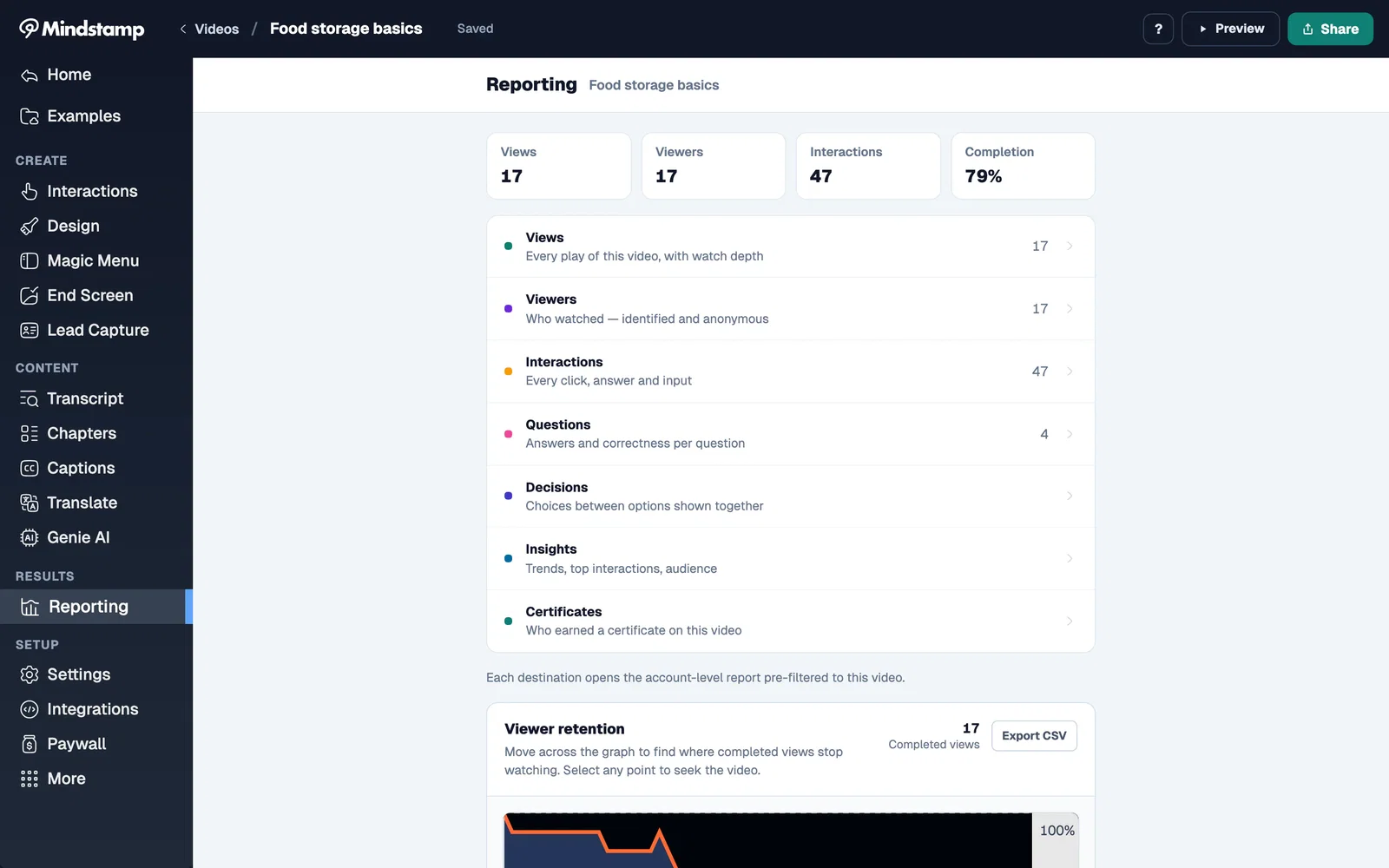
Update, October 2026: This post describes the editor redesign we shipped in October 2023, and its main ideas hold today. The interaction bar still shows the five most-used interaction types, and More holds the rest, grouped as media, playback and navigation, and logic and AI. The editor's side menu now sorts video settings into four groups: Create, Content, Results, and Setup. Lead Capture, Magic Menu, and End Screen sit under Create, and Chapters, Captions, and Genie AI sit under Content. You sign in to the editor at app.mindstamp.com, and our full walkthrough tours the current layout. In the short demo below, you pick the first interaction a new author should add to an existing safety video.
You may have heard about the overhaul the Mindstamp team just completed on the user experience for creating interactive videos. Part of the challenge of having a large set of features is presenting them in a clear and delightful way. The new UI is a big step in that direction, and a few key elements will help you get started.
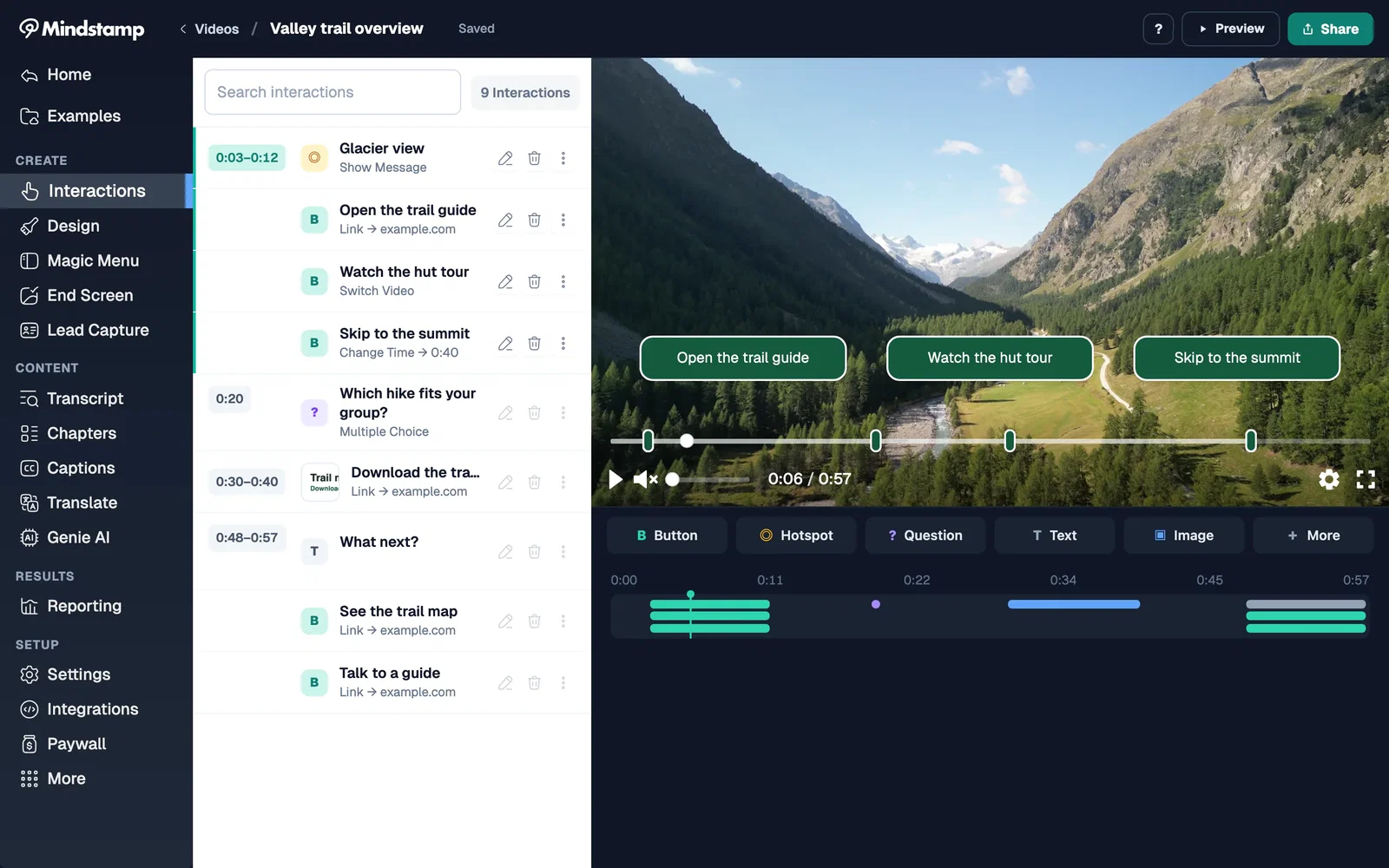
Ultimately, interactive video is all about the interactions. This is the core activity you're going to engage in within the Mindstamp UI, so we've made that the central navigation element. But we've also simplified our interaction toolbar to the most commonly used interactions (buttons, hotspots, questions, images and text) and moved a number of critical or more advanced interactions, like navigation, multimedia, and drawing, into a secondary More menu. Don't be afraid to explore More, though. There is gold in those hills.
Secondly, you want to make those interactions beautiful. Buttons should match your brand. Hotspots should emphasize your voice. Mindstamp has a rich toolkit of design options, ranging from preset colors to advanced HTML configurations, to let you create the engaging video experience you expect.
Next, you'll now see a number of critical functions within Mindstamp brought to the front of the navigation menu. We've always had these capabilities, but we want them front and center as you design your interactive experience. Examples include:
- Lead Capture: Mindstamp lets you capture lead information at any point in your video, whether that's right up front, at a specific time, or in response to a specific action by your viewer.
- Magic Menu: Every video needs a Magic Menu, as our post on interactive video menus explains. Whether your video is on your website, a landing page, your classroom syllabus, or your corporate training intranet, the video can and should offer more information, such as links to more content or a call to action like scheduling a demo. Don't miss out.
- End Screen: Congratulations! You got your viewer to the end of your video. Now what? Leaving them sitting on a replay option is bad news. Use this engagement to drive the next action.
- Paywall: Got video content you think is worth some coin? Use Mindstamp's video paywall to ask for payment before the video starts or at a specific time.
- Chapters and Captions: Helping your viewers find their way in your video is simple with Mindstamp. Create chapters, upload captions, and turn on the Guide so viewers can search chapter titles and the transcript inside your video.
Finally, you might notice Genie AI. We've talked a bit about generative AI in interactive video. Genie AI lets viewers ask questions inside your video and get answers based on the video and any material you train it on. It is available on supported plans and works from a transcript of your video. Contact us to learn more.