 Brett Lindenberg
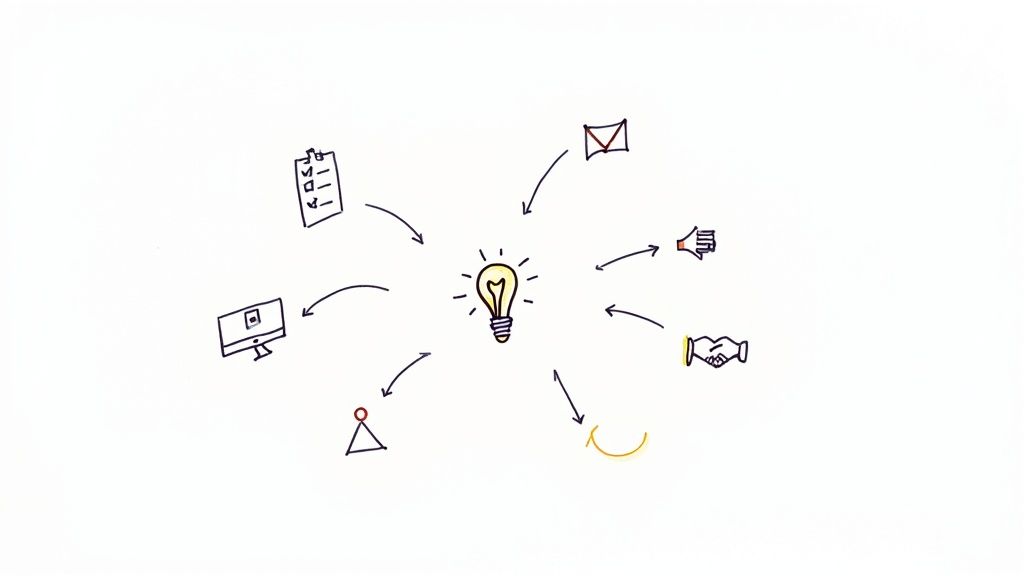
You build customer trust with video by showing the proof before you ask the viewer to believe the claim. Let viewers watch the product do the job, let real customers speak with their permission and with any paid connection disclosed, and say plainly what the product costs, what it does not do, and what happens after the click. Then act on what viewers tell you, so they can see that someone listened. Ecommerce product videos and sales demos earn trust the same way: the buyer sees the thing work and decides for themselves. In the 28-second demo below, a fictional tool claims that teams can review a request in one place, and you choose what the video should show next.
Why trust decides the sale, and where video helps
Buyers say trust is close to a requirement. In Edelman's 2019 special report In Brands We Trust?, 81% of 16,000 consumers in eight countries said "I must be able to trust the brand to do what is right" is a deal breaker or a deciding factor when they buy. Good reviews scored 77% on the same question.
Video helps because viewers can check a claim with their own eyes. They see the real size of a bag, or hear a customer describe the problem in their own voice. Video can also lose trust. In Wyzowl's 2026 video marketing survey, 89% of consumers said video quality affects their trust in a brand (the survey had 266 respondents, marketers and consumers, in late 2025). You can meet that bar without a large budget: a clear picture, clean sound, and scenes that show what the narration says. Our guide to animated marketing video on a budget covers the low-cost options.
Show the evidence before you make the promise
The demo above makes one point: a claim earns trust when the video proves it on screen. US advertising law sets the same bar. The FTC's Advertising FAQs for small business say you need a "reasonable basis" for a claim before the ad runs, which means objective evidence that supports it.
Before you film, list every claim in the script and the shot that proves it. If you cannot film the proof, make the claim smaller or cut it. Viewers believe a modest claim they can see for themselves sooner than a big one they must take on faith.
| Claim in the script | Weak support | Evidence the viewer can check |
|---|---|---|
| "Setup takes five minutes" | The narrator says setup is quick | One unbroken take of the setup with a timer on screen |
| "Fits in a carry-on" | A product shot on a white background | The bag going into an airline sizer and the zip closing |
| "Teams review requests in one place" | A line that says customers love it | A request moving from submitted to reviewed, with each step on screen |
| "Gentle on sensitive skin" | Happy customer quotes (the FTC says these usually do not support a health or safety claim) | The test behind the claim, named on screen, with who ran it |
How to build trust with video in ecommerce
Online shoppers cannot pick the product up, so the video has to settle the questions they would settle in a store, and tell them what happens if they get it wrong.
Show the product at real size and in real use
Film the exact variant you sell, in daylight, with color you have not pushed in the edit. Put it next to something everyone knows, such as a hand, a phone, or a person whose height you state. Then show it doing its main job from start to finish, such as a jacket packing into its own pocket or a blender crushing ice. One continuous shot of real use answers more doubts than a sequence of styled angles.
Answer the questions that cause returns
Sizing, fit, compatibility, assembly, and care are where expectations and reality split. When Pamela Danziger reported on Kearney's 2021 brand trust research for Forbes, the advice to retailers included easier returns and consistent, transparent sizing. Show the size guide and the return policy in the video, or one click away from it.
An interactive video can hold those answers without making the main video longer. A hotspot over the product can open the size guide or the spec sheet, and a "Will it fit?" button can jump to the fit section. If you sell on Shopify, an Add to Cart action lets viewers add the product without leaving the video (Shopify integration). Our guide to video hotspots for ecommerce shows how to make each product in a shot clickable.
Show reviews honestly, next to the video
Reviews do the most work when they look real. Northwestern University's Spiegel Research Center found in 2017 that a product with five reviews had a 270% greater purchase likelihood than a product with none, and that purchase likelihood peaked at average ratings between 4.0 and 4.7 stars, then fell as the rating approached 5.0. Shoppers expect some criticism. In BrightLocal's 2026 Local Consumer Review Survey of 1,002 US consumers, 74% looked for reviews written in the last three months, and the factor that most made a review trustworthy (56%) was other reviews with similar sentiment.
So show a recent, representative set, including a critical review and your reply. Do not curate your way to a perfect score. In the US, the FTC's rule on consumer reviews and testimonials (16 CFR Part 465, in force since October 21, 2024) bans these practices:
- Fake reviews and testimonials, including AI-generated ones, from people who do not exist or who never used the product.
- Paying for reviews or giving incentives on the condition that the review is positive or negative.
- Reviews by your own staff or managers that do not disclose the connection.
- Suppressing negative reviews with threats or false accusations, or claiming that the reviews you show are all or most of the reviews you received.
The FTC's Endorsement Guides Q&A adds that holding back only negative reviews, even for a few days, can create a biased picture. This is general information, not legal advice. For the work of collecting reviews in the first place, Pyxl's guide on how to boost your brand with online reviews covers where to ask and how to reply.
How to build buyer trust with product demos
A buyer watches a demo to find out whether the product does their job. Answer that question for their case, and be honest about what the product does not cover.
Use the real product
Record the shipping product, not a design mockup or a slide of a screen. If you use sample data, say so on screen. Keep the cursor visible and the pace real, so the viewer can judge how many clicks the task takes.
Let the buyer choose the use case
One linear demo makes every buyer sit through features they do not need. Ask at the start what they want to evaluate, then send each answer to its own section with video branching. In Mindstamp, a Change Time action jumps within one video, so all the sections live in one file and one view records the path. The Take the Tour You Need example works this way, and interactive product tours covers the setup for marketing teams.
Show the limits and the hard parts
Show the setup step, an error message and how to recover from it, and the features that need an integration or a higher plan. Buyers notice what a demo skips. In a 2018 Sprout Social survey of 1,000 US consumers, reported by ZDNet, 69% said brands seem to lack transparency when they withhold information.
Make the next step clear
Say what happens after the demo: what a call covers, how pricing works, and how long setup takes. If the next step is a meeting, an in-video Calendly or HubSpot calendar lets the buyer book at the moment they decide (calendar embedding). For video across the rest of a deal, see video for sales, and for a step-by-step build, how to create an interactive product demo video.
Use testimonials without losing trust
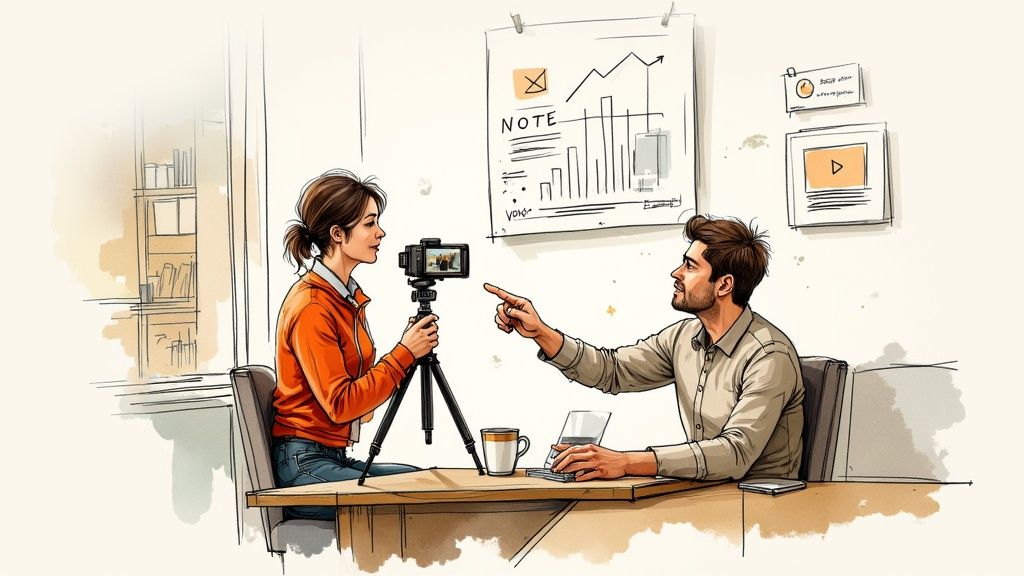
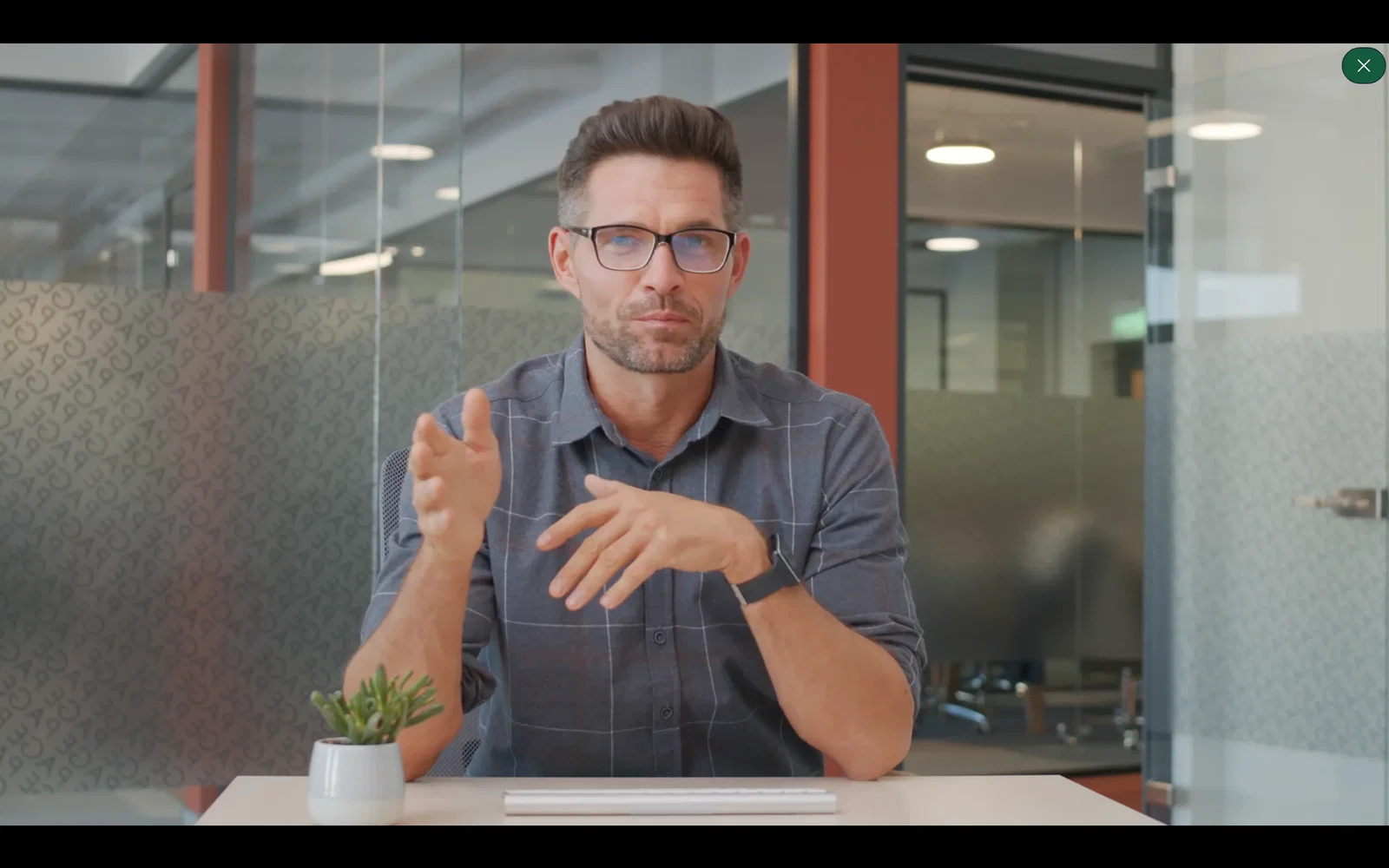
A strong testimonial has a real customer describe a specific problem, what changed, and how long it took, in their own words. Get written permission, use their name, role, and company where they agree, and keep the edit faithful to what they meant. Specific details help viewers believe the story, so leave them in.
Then check the three points the FTC's guidance covers:
- Disclose any material connection, such as payment, a free product, a discount, or employment. If the endorsement is both spoken and shown, the FTC says the disclosure should be both spoken and shown. Put it near the start of the video, because viewers who stop early never see a disclosure at the end.
- If the customer got unusually good results, tell viewers what customers generally achieve, or have proof that the result is typical.
- Do not present an actor or an AI presenter as a customer. The 2024 rule treats testimonials from people who do not exist, or who never used the product, as fake.
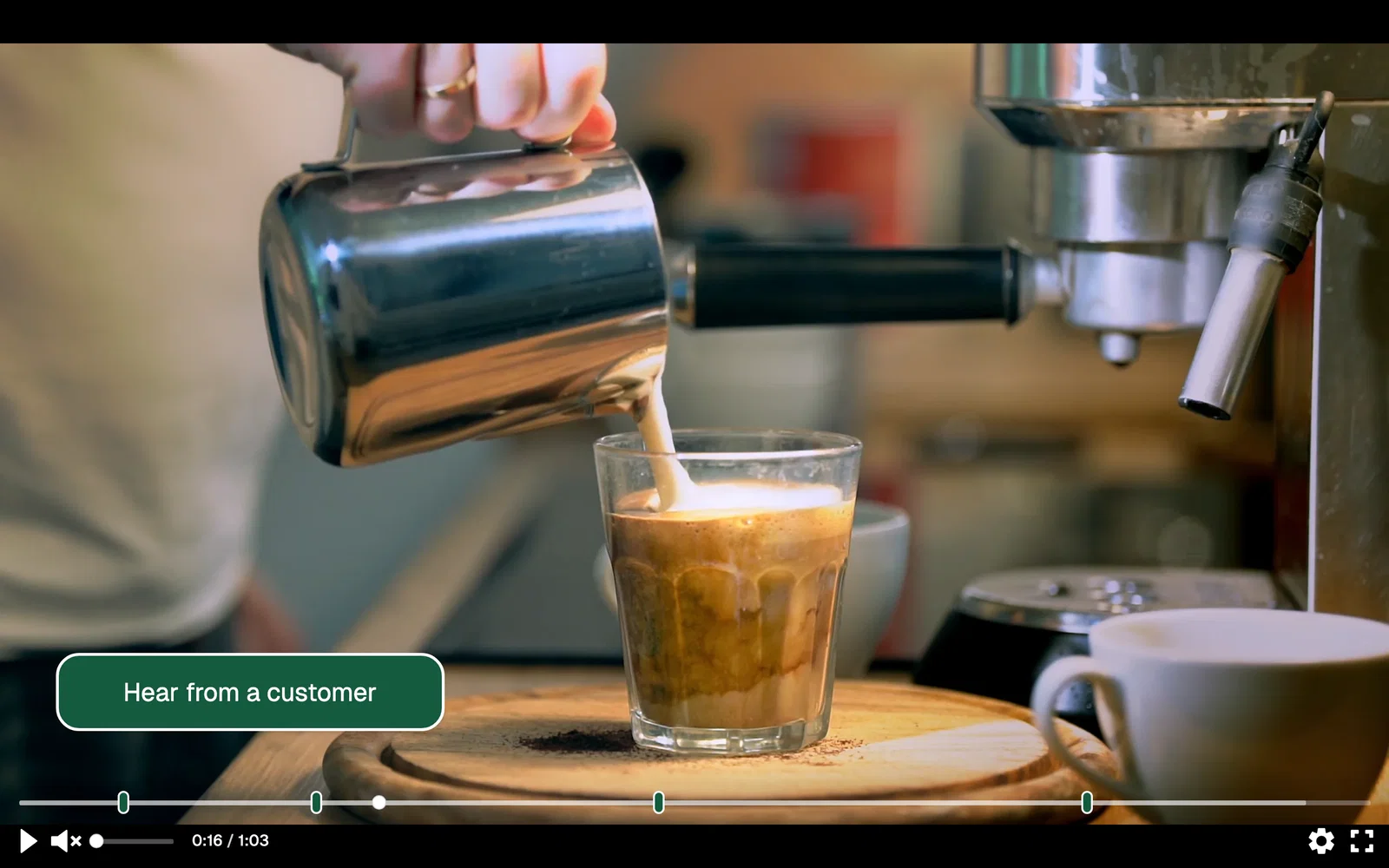
In an interactive video, you can keep the main story short and offer testimonials on demand. A button such as "Hear from a customer in your industry" can play a video clip inside the main video. The main video pauses while the clip plays and continues where it stopped.
Ask viewers what they think, and show that you heard them
A question during the video shows viewers that you want their view, and you get the answer while the scene is fresh. Add a rating question (one to five stars) after the key scene, and follow it with a free-response question that asks what would make the rating higher. On supported plans, Mindstamp stores an answer in a personalization variable, so a later scene can say "You told us {{biggest_concern|your main concern}} matters most. Here is how we handle it." With conditional logic, a low rating can open a follow-up question or a button that starts an email to your team.
Keep feedback separate from proof. The demo at the top makes this point in its third route: a poll records an opinion, but it does not prove the product claim. Label it as feedback and put it after the demonstration.
Then reply. In BrightLocal's 2026 survey, 80% of consumers said they are likely to use a business that responds to all of its reviews, and 50% said templated or generic replies make them unlikely to choose a business. Free-response answers deserve the same personal reply. Mindstamp's per-viewer reports show each answer and click with its time in the video, so when a viewer has given a name or email, you know who said what before you follow up. Other interactive video tools report similar data, such as click-through, poll and quiz submissions, and re-watches of sections; Interactive4video's analytics page lists the metrics it tracks. Using what viewers tell you is practice 7 in our interactive video best practices.
When feedback shows a real problem, say so in your next video. In the same Sprout Social survey, 89% said a business can regain their trust if it admits a mistake and is open about the steps it will take to fix it.
Be open about who you are and what happens next
Put the people who build and support the product on camera. In the Kearney research reported in Forbes, 76% of consumers trusted small businesses more than large ones, and the article credits much of that to the personal connection small businesses have with customers. A founder explaining a design choice, or a support lead walking through a fix, gives viewers a person to trust.
Say how pricing works, how long delivery or setup takes, and what happens after someone fills in a form. Keep the policies a careful buyer looks for, such as returns, security, and privacy, one click away for the whole video. In Mindstamp, a button that stays visible for the whole video or the Magic Menu, a menu of links viewers can open at any point, does this job. The Sprout Social survey asked about social media, where 86% of consumers said they are likely to take their business to a competitor when a brand lacks transparency.
Common questions
How do I measure whether a video builds trust?
You cannot measure trust directly, so track what trust changes. Watch how many viewers reach the proof scene and replay it, what they answer in rating questions, and which questions they type in. Then compare conversion, return rates, and support tickets for products with and without the video. Change one thing at a time so you know which change moved the number.
Should I ask for an email before the video starts?
A form before any proof asks the viewer to trust you first. For a trust-building video, place lead capture after the proof scene, or make it optional, and say what you will send. Gate the video at the start only when the content is the thing you are trading for the email.
Can I use AI presenters or AI-generated testimonials?
An AI presenter can explain a product if viewers can tell it is a presenter and not a customer. AI-generated reviews or testimonials presented as real customer experiences fall under the FTC's ban on fake reviews and testimonials in the US. If you are unsure where a video falls, ask your legal counsel before you publish.
Start with the claim buyers doubt most
Pick the claim your sales team or support inbox hears doubts about most often. Film the scene that proves it, put it early in the video, and add one question after it that asks whether the scene answered the doubt. Read the answers as they arrive, reply to the people who wrote in, and fix the next version of the video based on what they said.