 Brett Lindenberg
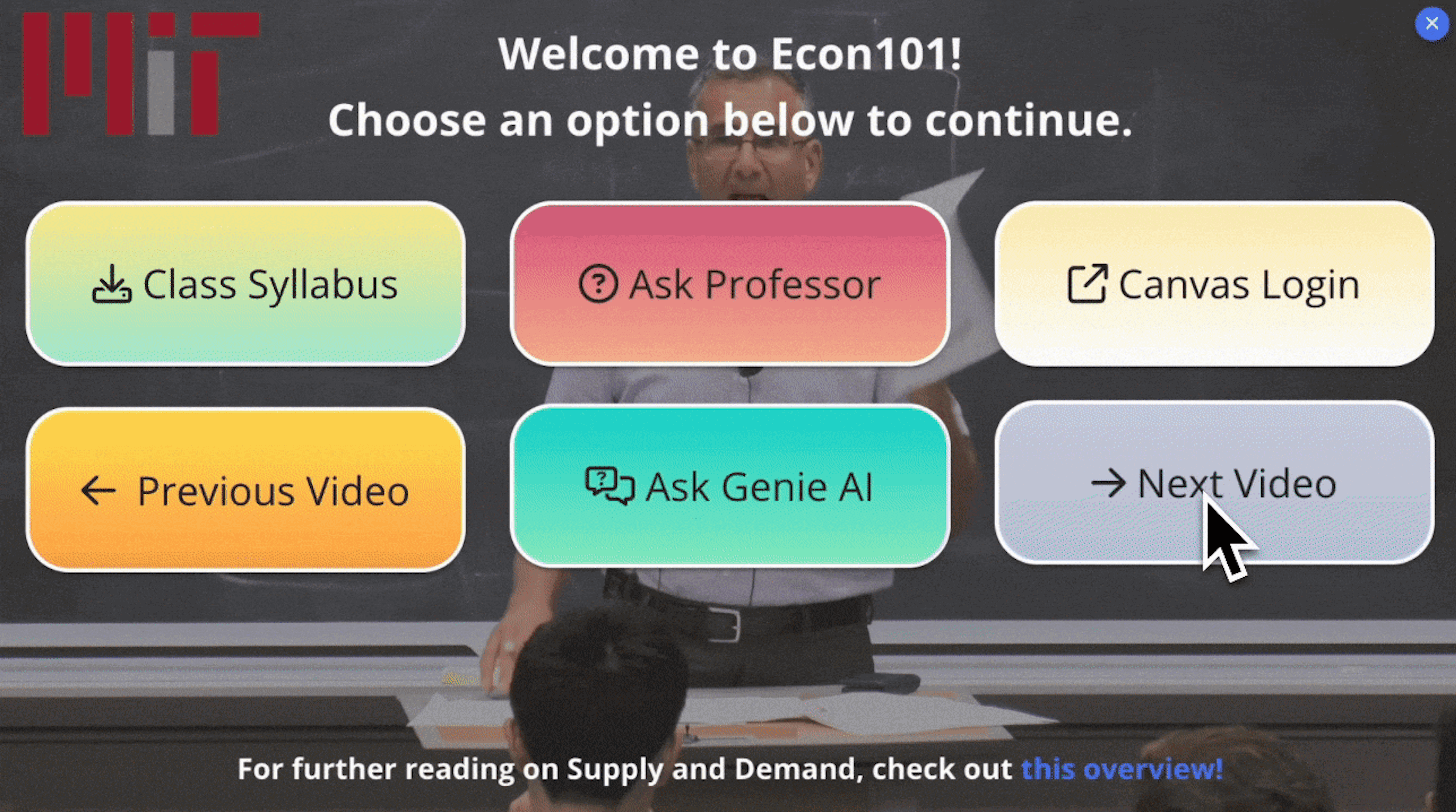
The best way to add a CTA to a video depends on where the video plays. To put a clickable button inside the video at any moment, use an interactive video player: place the button at a timecode, label it with the result (for example "Book a demo"), choose what the click does, and share or embed that player. On YouTube, add an end screen or a card in YouTube Studio, and note that links to your own website need YouTube Partner Program membership. Vimeo and Wistia have call-to-action settings of their own. Text added in a video editor shows wherever the file plays, but viewers cannot click it. The demo below ends a product tour with three CTA buttons.
Ways to add a call to action to a video
Pick the method by where viewers will watch and whether you need to know who clicked.
| Method | Clickable | When it can appear | Click data | Where it works |
|---|---|---|---|---|
| Button in an interactive player, such as Mindstamp | Yes | Any second, for as long as you choose | Each click, with the viewer and the timecode | Wherever you share the link or embed the player |
| YouTube end screen or card | Yes. External links need YouTube Partner Program membership | End screen: last 5 to 20 seconds. Card: a teaser at a time you set | End screen element click rate in YouTube Analytics | YouTube |
| Vimeo call-to-action end screen | Yes | After the video finishes | CTA performance in the video's Analytics tab | Paid Vimeo plans, on embeds and unlisted or password-protected videos |
| Wistia call to action or annotation link | Yes | At any timestamp | Annotation link clicks in the Engagement tab | The Wistia player. Wistia lists CTAs on its Business plan and above |
| Text or end card added in a video editor | No | Anywhere in the file | None | Everywhere the file plays, including social apps |
| Button on the web page beside the video | Yes | Always, outside the video frame | Your website analytics | Your own site |
If you are still deciding what the CTA should ask for and where it belongs, start with our guide to why video CTAs matter and where to place them. The steps below assume you know the ask.
How to add a CTA button to a video with Mindstamp
Mindstamp adds buttons and other interactions on top of a video you already have, without changing the file. These steps follow our help article on adding a clickable button.
- Create the video. Upload the file, or link a video you host on Vimeo or Wistia. For Vimeo, paste the direct HLS or 1080p MP4 file link, not the address of the Vimeo page. A YouTube link works for testing only, so upload the original file before you publish (why YouTube is for testing).
- Open the video, select Interactions, and move the playhead to the moment the CTA should appear. Click Button in the interaction bar. The new button starts at the playhead and shows for 10 seconds.
- Under Content, type the button text. Name the result, such as "See pricing" or "Book a call."
- Choose a Click Action and fill in its value. Open Link opens a web page and pauses the video, in a new tab unless you turn that setting off. Other actions include Change Time, Switch Video, Start Email, and Start Call. The help center lists every click action.
- Under Timing, set the Show and Hide times, then choose a Pause option. None keeps the video playing. At show time pauses when the button appears, and At hide time (Require Click) pauses at the hide time until the viewer clicks.
- Drag the button into place and resize it. Under Styling, change its colors, font size, and roundness.
- Click Save Button, then Preview, and click the button to test it.
- Publish, then copy the share link or the embed code from Share.
Previews that you play as the owner do not record viewer data. To check the whole path, open the share link in a private browser window, click the button, and find the click under Reporting. The reporting guide explains each report.
Add a CTA at the end of the video
Open End Screen in the video menu and choose an option under When the video ends. Show Button displays a message and one button that can open a link, switch to another video, start an email or a call, or download a file. Show Custom Screen lets you build the end screen from your own buttons, text, and images, which suits two or three next steps such as "Book a demo" and "Watch the next lesson." To keep your own buttons on the frozen last frame instead, set their Hide time to End and choose None: Pause on Last Frame. See how to add a CTA at the end of a video, or watch the end screen tutorial.
Add a CTA at the start
Set the button's Show time to Start (0:00). To make the video wait for a choice, set Pause to At show time and Pause Length to Until Interaction. To ask for a name or email before the video plays, open Lead Capture and choose At start. Asks for a sale or a meeting usually work better after the viewer has seen some value, so keep the opening ask light. Our article on CTAs at the start of a video covers each option.
Keep a CTA on screen for the whole video
Under Timing, hover the Show field and click Start, then hover the Hide field and click End. Set Pause to None, keep Post Click State at No Change so the button stays after a click, and move it to a corner away from captions and the player controls. If you want several links available all the time, a Magic Menu of resources is another option; see always-available calls to action.
Offer two to four CTAs at once
Add the first button, then click Save & Add Another. Mindstamp opens a copy with the same timing and style, ready for new text and a new link. To make the video wait while the viewer chooses, set one button's Pause to At show time with Pause Length set to Until Interaction. Do not set Require Click on every option of an either-or choice, because the video would wait until the viewer clicks all of them. See adding several buttons at once.
Use a hotspot or an image as the CTA
When the product is already on screen, make the product itself clickable. Click Hotspot, drag it over the object, and set its Hide time to when the object leaves the frame. If the object moves, Track motion under Styling makes the hotspot follow it; tracking needs a hotspot that shows for at least 3 seconds and does not pause the video. Use an image when the picture carries the meaning, such as a thumbnail of the next video, and type a caption, which screen readers read as its text alternative. Read more about hotspots and image buttons.
How to add a call to action to a YouTube video
YouTube's player runs only YouTube's own elements, so CTAs on YouTube come from end screens, cards, and links. Our guide to YouTube's interactive features covers each one in more depth.
Add an end screen
- Sign in to YouTube Studio and select Content.
- Select the video, then Editor.
- Select End screen and add an element: Video, Playlist, Subscribe, Channel, or Link.
- Drag each element into place, set its timing, and click Save.
According to YouTube's end screen help, end screens use the last 5 to 20 seconds of a video, the video must be at least 25 seconds long, and a 16:9 video can show up to 4 elements. The Link element, which goes to an outside website, is only for members of the YouTube Partner Program. End screens do not show on mobile web (iPad excepted) or on videos set as made for kids, and viewers can hide them. Leave the last 20 seconds of your edit free for the end screen.
Add a card
In the same Editor, select Info cards and choose Video, Playlist, Channel, or Link. YouTube's cards help page allows up to 5 cards per video, shows a teaser at the time you set, and again limits Link cards to Partner Program members.
Add a CTA to a YouTube Short
In YouTube Studio, select Content, open the Short, and click Related video to link it to a long video, a live stream, or another Short on your channel. YouTube's July 2026 Shorts guide recommends verbal and visual cues in the final 5 seconds that point viewers to that link.
Add a clickable button anywhere in a YouTube video
YouTube's developer policies bar apps from modifying or building upon its player, so a button at any second of the video has to come from a different player. Use the original file in an interactive player, then share that link or embed it on your site, and point YouTube viewers to it from your description or an end screen. To send viewers the other way, a Mindstamp button can open your YouTube channel with a subscribe prompt.
How to add a call to action on Vimeo or Wistia
On Vimeo, open the video's settings, select Interactivity, then End screen, and choose Call to action. It shows a button with your link after the video finishes, with an optional title, description, and background image. Vimeo's end screen help lists the feature for paid plans and says end screens show only when the video is embedded or set to unlisted or password-protected. Public video pages on vimeo.com use the default end screen. Vimeo's interactive hotspots are available only on custom Enterprise accounts (both checked October 2026).
In Wistia, open Customize on the media page and select the Call to action tab. Wistia's CTA help article describes three types (text, image, and custom HTML) that can appear at any timestamp, and viewers can always skip it. For a lighter prompt, annotation links show a short text link with start and end times, and Wistia counts their clicks in the Engagement tab. Wistia's pricing page lists CTAs and forms on its Business plan and above (checked October 2026).
How to add a call to action to a video on WordPress
WordPress gives you three options, from simplest to most capable.
- Put a button under the video. Add your Video block or video embed, then a Buttons block below it with your link. The button sits outside the video frame and stays visible the whole time.
- Put a button over a background video. The Cover block places text and other blocks, such as a Buttons block, over a background image or video, and WordPress suggests it for calls to action. A background video you upload plays muted and on a loop with no player controls, so use this for a short silent clip.
- Embed an interactive video. In Mindstamp, open Share, choose Responsive under Embed, and copy the embed code. In WordPress, add a Custom HTML block (type /html) and paste the code. The buttons and the click reports come with it.
If your WordPress role lacks the unfiltered_html capability, as Contributors do, WordPress strips iframe tags from a Custom HTML block when you save, so ask an administrator to add the embed. If the code shows as text on the page, it went into a paragraph block instead of an HTML block. Our guide to embedding a video on your website covers other site builders.
Design the button so viewers click it
- Keep the label short and start it with a verb. A long label wraps on a phone and makes the button taller.
- Give the button an opaque background and a border, and check it over the lightest and darkest scenes behind it. WCAG 2.2 asks for a contrast ratio of at least 4.5 to 1 between normal text and its background.
- Make the click area at least 24 by 24 CSS pixels, the WCAG 2.2 target size minimum, and leave space between buttons for a finger. The player is much smaller on a phone than in your editor.
- Keep buttons away from faces, captions, and the player controls. In a vertical 9:16 video, keep them away from the bottom of the frame, where the controls show.
- Keep motion brief. In Mindstamp, a Transition sets how a button appears and an Animation adds motion while it shows (on supported plans). WCAG 2.2 success criterion 2.2.2 expects a way to pause, stop, or hide motion that starts on its own and lasts more than 5 seconds, so a one-time entrance is safer than a looping effect.
Mindstamp sets default button colors and roundness under Design, so every new button starts with your brand style. See how to change how buttons look.
Test the CTA before you share it
- Open the share link in a private browser window, where you are not signed in.
- Play to the CTA, click it, and check that the destination opens.
- Repeat on a phone in portrait and landscape. If a button is missing on the phone, check its Visibility setting, which can limit it to desktop or mobile.
- Open Reporting and find your test click. A session counts as a finished view when the viewer reaches the end, closes the page, or stops for about 2 minutes, so the click can take a few minutes to appear.
Our checklist for publishing and checking on a phone lists more checks.
Common questions about adding CTAs to videos
Can I add a clickable link to an MP4 file?
No. An MP4 file holds pictures, sound, and some metadata, and the players on websites, in social apps, and on phones do not turn anything inside it into a clickable button. A clickable CTA comes from the player, such as a YouTube end screen or an interactive player, or from the web page around the video.
How do I add a call to action button on Instagram?
Instagram plays an uploaded video as a flat video, so buttons you add in another tool do not appear there. Use the link options Instagram gives your account, such as the link in your profile, and say the CTA out loud and on screen. To give Instagram viewers the clickable version, link to the interactive video's share link, which opens in the app's built-in browser.
Which video platforms support in-video calls to action?
YouTube has end screens and cards, Vimeo has a call-to-action end screen and offers interactive hotspots to custom Enterprise accounts, and Wistia has CTAs and annotation links. Interactive video platforms such as Mindstamp add buttons, questions, and branching on top of a video you host or upload. Our comparison of interactive video platforms explains how to choose one.
Can a CTA click go to my CRM?
Yes, if the viewer is identified. On supported plans, Mindstamp sends clicks to HubSpot, webhooks, or Zapier after the viewing session ends. Our guide to video CTAs explains each route and what each one sends.