Comparable across viewers
Every rating uses the same one-to-five star scale, so answers combine into a result you can put on a slide.
Ask a question
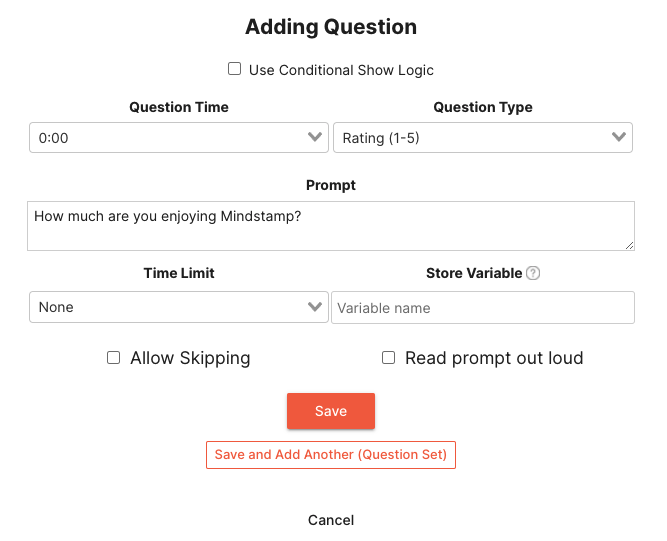
Ask viewers to rate something from one to five stars inside the video, then read how the ratings spread in the report.
What it does
A rating turns an opinion into something you can compare across audiences and over time.
Every rating uses the same one-to-five star scale, so answers combine into a result you can put on a slide.
Rate the thing while it is on screen, not from memory at the end.
Store the rating in a variable, then use conditional logic to show a follow-up question only to viewers who rate low.
In practice
Measure confidence, clarity, and interest during the video.
What gets reported
Every interaction on the timeline is recorded against the viewer who used it.
Standard video analytics
412 plays
A play count does not tell you who watched, or what they did at this moment in the video.
Viewer report · Rating questions412 viewers
+ 409 more viewers
Related
These combine on one timeline. Most videos use three or four together.
Let viewers select each option that applies, then score the full response set.
Set the correct response on any question so Mindstamp scores it automatically and reports who passed.
Collect a real date from the viewer inside the video, in a format that stays usable downstream.
Ask viewers to circle, mark, or annotate directly on the frame, and keep the drawing as their submitted answer.
Give viewers a dropdown when there are too many options to show as buttons, and keep the frame clean.
Ask an open question inside the video and collect typed answers against each viewer, no form page required.
Questions
No. Rating questions always use one to five stars. For a different range, use a number question. For worded options, use a multiple choice question.
Yes. Store the rating in a variable (Core plan and above), then add conditional logic (Pro plan and above) to a later interaction, for example to show it when the rating is less than 3.
Responses are exportable per viewer with timestamps, so before-and-after comparisons are straightforward.
Try it on one video
One question, one scale, and a distribution you can act on.